Small Pop-ups or Big Festivals: WiFi That Scales With You
Here's the thing about events, they're all over the map. Literally. One week you're running a craft fair in a village hall with 50 exhibitors. The next, you're coordinating a 15,000-person music festival in the middle of a field. Same need though: WiFi that actually works.
The tech doesn't care whether it's big or small. But the setup? That's where things get interesting.
When Small Means Critical
Let's talk about the "small" stuff first, the pop-up markets, craft shows, and local food festivals. These events might not have thousands of attendees, but they're no less demanding when it comes to connectivity.
Picture this: a Saturday farmers' market. Twenty stalls selling everything from artisan bread to handmade jewellery. Every single one needs card payments. No WiFi? No sales. It's that simple.
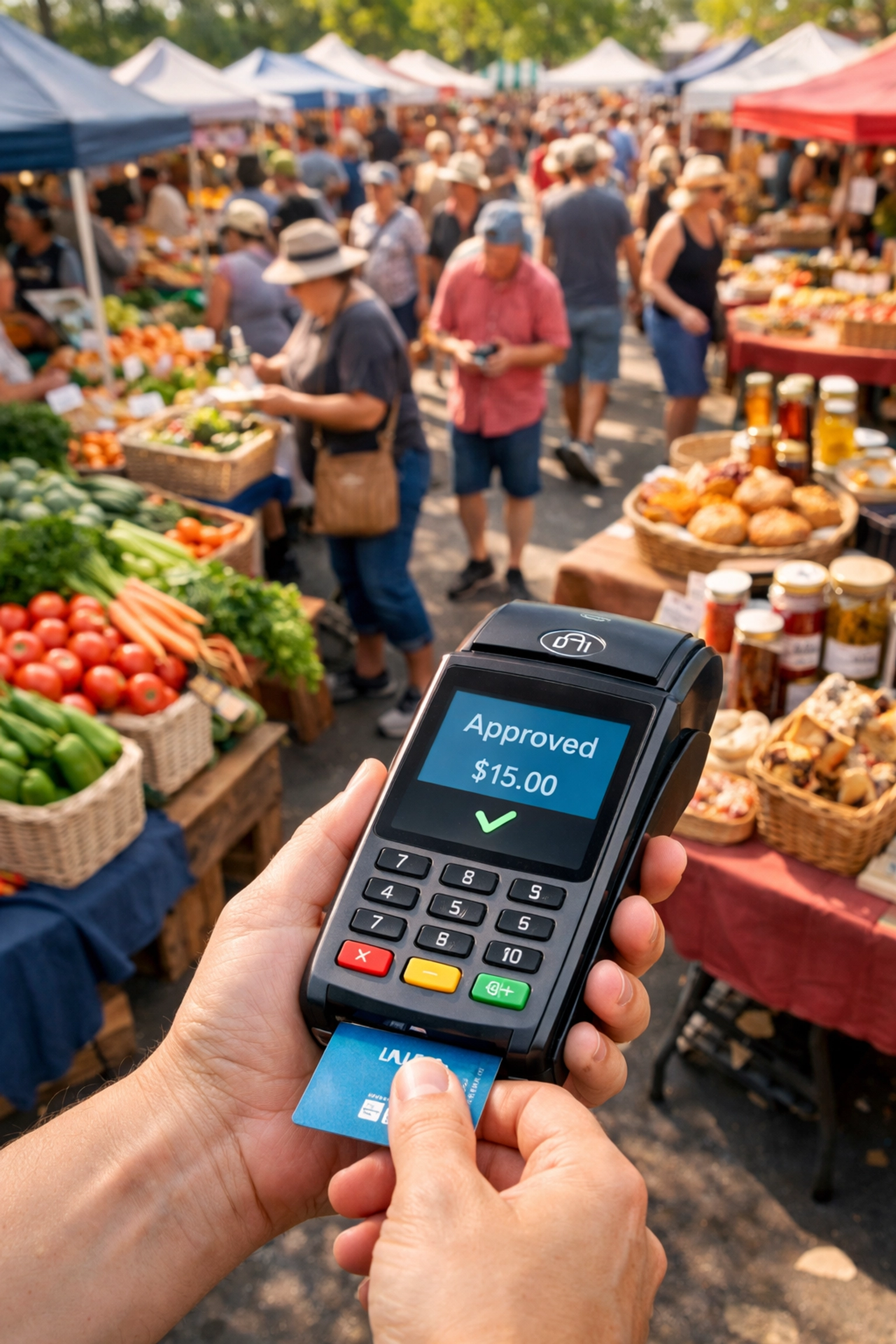
For events like these, you're typically looking at 200 to 500 devices trying to connect at once. That includes exhibitors running their card readers, a few attendees checking social media, and maybe event staff coordinating logistics. Not massive numbers, but they all need reliable connections, especially those payment terminals.
Small events have zero tolerance for downtime. A glitchy connection at a music festival is annoying. A glitchy connection that stops a small business owner from taking payments? That's their weekend income gone.
That's why we approach smaller events with the same seriousness as the big ones. Portable systems, yes, but built to handle peak demand without breaking a sweat. We're talking plug-and-play setups that can support up to 300 attendees, with enough bandwidth headroom to keep card readers humming along even when everyone queues up at lunchtime.
When Big Gets Complicated
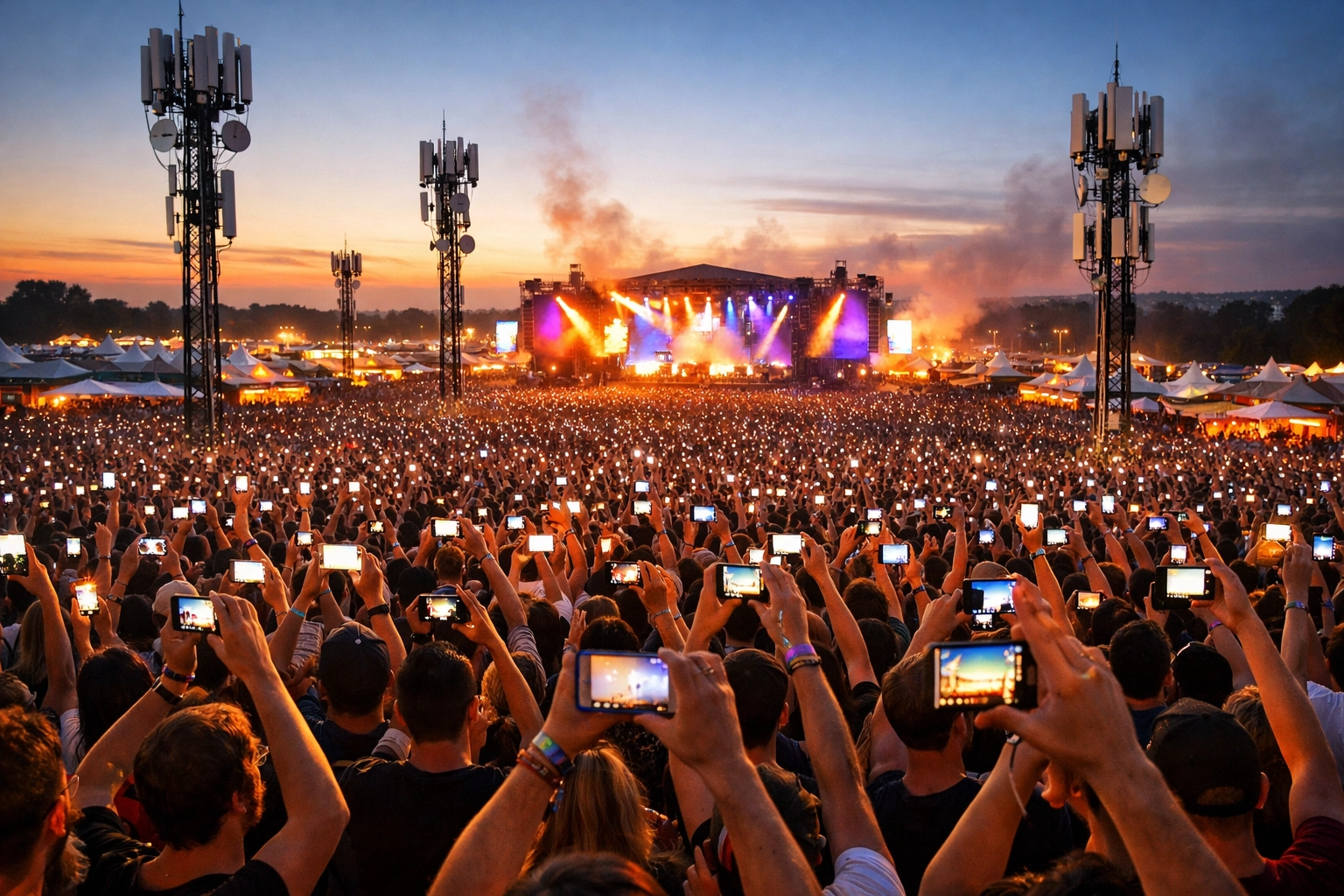
Now flip to the other end of the scale. Multi-day festivals. Agricultural shows. Outdoor concerts with 10,000+ people all trying to post Instagram stories at the same time.
This is where things get properly interesting.
Large events aren't just about having "more WiFi": they need an entirely different infrastructure. We're talking multiple access points spread across the site, custom high-density networks, and often mobile towers reaching up to 150 feet to blanket the entire area.
The concurrent user count tells the real story. A 15,000-person festival doesn't mean 15,000 devices connected at once: it's usually closer to 2,000 to 5,000 concurrent connections. Still massive, and it requires careful planning.
Here's what large-scale event WiFi needs to handle:
Crowd management systems tracking entry and exit points
Live streaming from multiple stages or demo areas
Media teams uploading content in real-time
Exhibitor booths needing dedicated connections
Payment terminals across food vendors and merchandise stalls
Attendees sharing their experience across social channels
Each of these has different demands. A payment terminal needs rock-solid reliability but minimal bandwidth. A live stream needs consistent upload speeds. Attendees just want to tag themselves in a photo without waiting five minutes for it to upload.
That's why we build tiered systems for larger events: giving VIP areas and critical operations guaranteed bandwidth while keeping general attendee access fair and functional.
The Bit in the Middle
Not every event fits neatly into "small" or "massive." There's a whole world of medium-sized conferences, regional trade shows, and community festivals that fall somewhere in between.
These events: typically 2,000 to 5,000 attendees: need something more robust than a portable hotspot but not quite the full festival treatment. They're the sweet spot for flexible, scalable solutions.
Maybe it's a two-day conference with breakout sessions, an exhibition hall, and a few hundred delegates all video-calling back to the office between sessions. Or a county show with livestock judging, craft stalls, and a main arena hosting displays.
These events benefit from modular systems: we can add access points where needed, boost capacity in high-traffic zones, and dial back coverage in quieter areas. It's all about reading the venue and adapting on the fly.
Same Systems, Different Scale
Here's what people don't always realise: the core technology stays consistent whether you're covering 100 people or 10,000. We're using the same cloud-managed platforms, the same authentication systems, the same monitoring tools.
What changes is the scale and configuration.
For a small pop-up, we might deploy a single powerful access point and a straightforward network setup. For a festival, we're coordinating dozens of access points, managing bandwidth caps per user (usually around 8-10 Mbps to keep things fair), and monitoring everything through centralised dashboards.
The beauty of scalable WiFi is that it grows with you. Host a small event this year and a bigger one next year? We're not starting from scratch: we're expanding what already works.
Tailoring Tech to Real Needs
Every event is different, and cookie-cutter solutions don't cut it.
A craft fair doesn't need the same setup as a music festival. The craft fair needs bullet-proof connections for card payments and maybe basic attendee WiFi. The music festival needs crowd density monitoring, media upload capacity, and the ability to handle thousands of devices pinging the network simultaneously.

We spend time before every event: big or small: understanding exactly what's needed. How many concurrent users? What's the venue layout? Are there dead zones? What's mission-critical versus nice-to-have?
Then we build accordingly. Sometimes that means a simple plug-in system ready in 30 minutes. Other times it means mobile towers, multiple backhaul connections, and an on-site team monitoring network health throughout the event.
No Job Too Small, No Festival Too Big
That's not just a catchy line: it's how we approach every brief.
We've handled tiny community events where reliable payments were the only requirement. We've also covered major festivals with tens of thousands of attendees streaming, posting, and paying their way through the weekend.
The mindset doesn't change. Whether it's 50 people or 50,000, connectivity matters. Events rely on it. Exhibitors need it. Attendees expect it.
And here's the thing about scalability: it's not just technical. It's about being flexible, responsive, and hands-on. Events change. Crowd patterns shift. Weather happens. Plans evolve.
We adapt. On the day. In real-time.
Why Scalability Matters More Than You Think
If you're organising your first event, you might not be thinking about scalability yet. You're focused on getting the basics right: understandably.
But here's why it's worth considering from the start: events grow.
That pop-up market you're running this year? If it goes well, it'll be bigger next year. More stalls. More attendees. More devices needing connections.
If your WiFi provider can only handle small-scale setups, you'll be starting over. New supplier. New systems. New headaches.
But if you work with a provider built for scalability: someone who can handle your 50-stall market and your future 5,000-person festival: you're set. The relationship grows with you. The tech adapts. You're not constantly relearning how things work.
It All Comes Down to This
Event WiFi isn't one-size-fits-all, and it shouldn't be.
Small events need reliable, no-fuss connectivity that lets vendors take payments and keeps things ticking along. Big events need robust infrastructure, crowd management capability, and the flexibility to handle thousands of connections without breaking.
We handle both. And everything in between.
Because whether it's a village craft fair or a multi-day festival, the goal is the same: WiFi that just works, so you can focus on running a brilliant event.
No job too small. No festival too big. Just reliable connectivity that scales with you, every single time.
Comments