Does Event Internet Really Impact Revenue? The Real Cost of Downtime
Here's a question that keeps event organisers up at night: What does five minutes of WiFi downtime actually cost?
Most people think about it as a technical hiccup. An inconvenience. Maybe a few grumbles from attendees who can't refresh Instagram for a bit.
But if you're running festivals, conferences, or exhibitions in 2026, the truth is far more uncomfortable. Event internet downtime isn't just frustrating, it's a direct, measurable threat to your revenue.
Let's break down what's really at stake when your connectivity drops.
When the Payment System Goes Dark, So Does Your Revenue
Picture this: It's Saturday afternoon at your festival. The headline act just finished. Thousands of attendees head to the bars, food stalls, and merch tents at the same time.
Then your WiFi drops.
Suddenly, none of the cashless payment terminals work. Card readers freeze. QR codes won't scan. Your vendors are stuck telling a queue of thirsty, hungry punters: "Sorry, cash only."
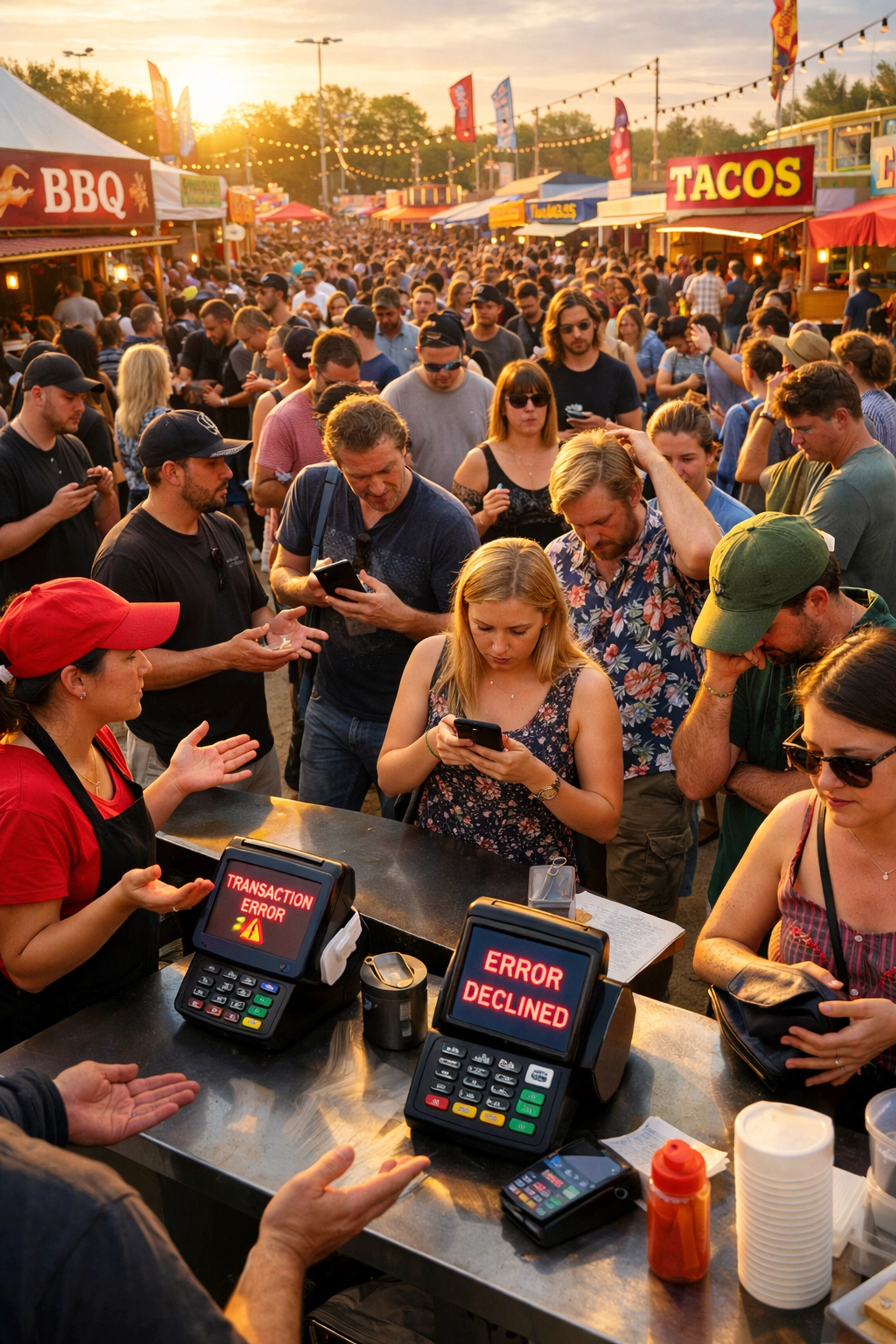
Except hardly anyone carries cash anymore.
According to UK Finance, cash payments dropped to just 14% of all transactions in 2023: and that number keeps falling. Most of your attendees simply won't have a £20 note in their pocket. So what happens?
They walk away.
A five-minute outage during peak service times can easily mean hundreds: if not thousands: of lost transactions. If your average transaction is £15 and you've got 50 vendors frozen for just 10 minutes during a rush, you're looking at potentially £7,500+ in lost sales. Scale that up to a multi-day festival, and the numbers get painful fast.
But here's the thing: it's not always a complete blackout that causes the damage. Sometimes it's slowness. Terminals that take 45 seconds to process instead of 5. Attendees who give up after the third failed tap. Death by a thousand failed transactions.
This is exactly why POS and payment systems need their own isolated, prioritised network segment: not fighting for bandwidth with guest WiFi and Instagram uploads.
Ticketing Delays Aren't Just Annoying: They're Dangerous
Let's talk about what happens at the gate when your internet connection starts struggling.
Your ticketing system: whether it's scanning QR codes, syncing with a cloud database, or validating NFC passes: needs real-time connectivity. When that connection stutters or drops, everything slows down.
Queues grow. Frustration builds. And if you're at a large-scale event, that's not just a customer service problem: it's a safety risk.
Crowd management depends on controlled entry flow. When your gates freeze up and a bottleneck forms, you're looking at potential crushing hazards, aggressive behaviour, and regulatory breaches. Security teams hate it. Licensing authorities really hate it.
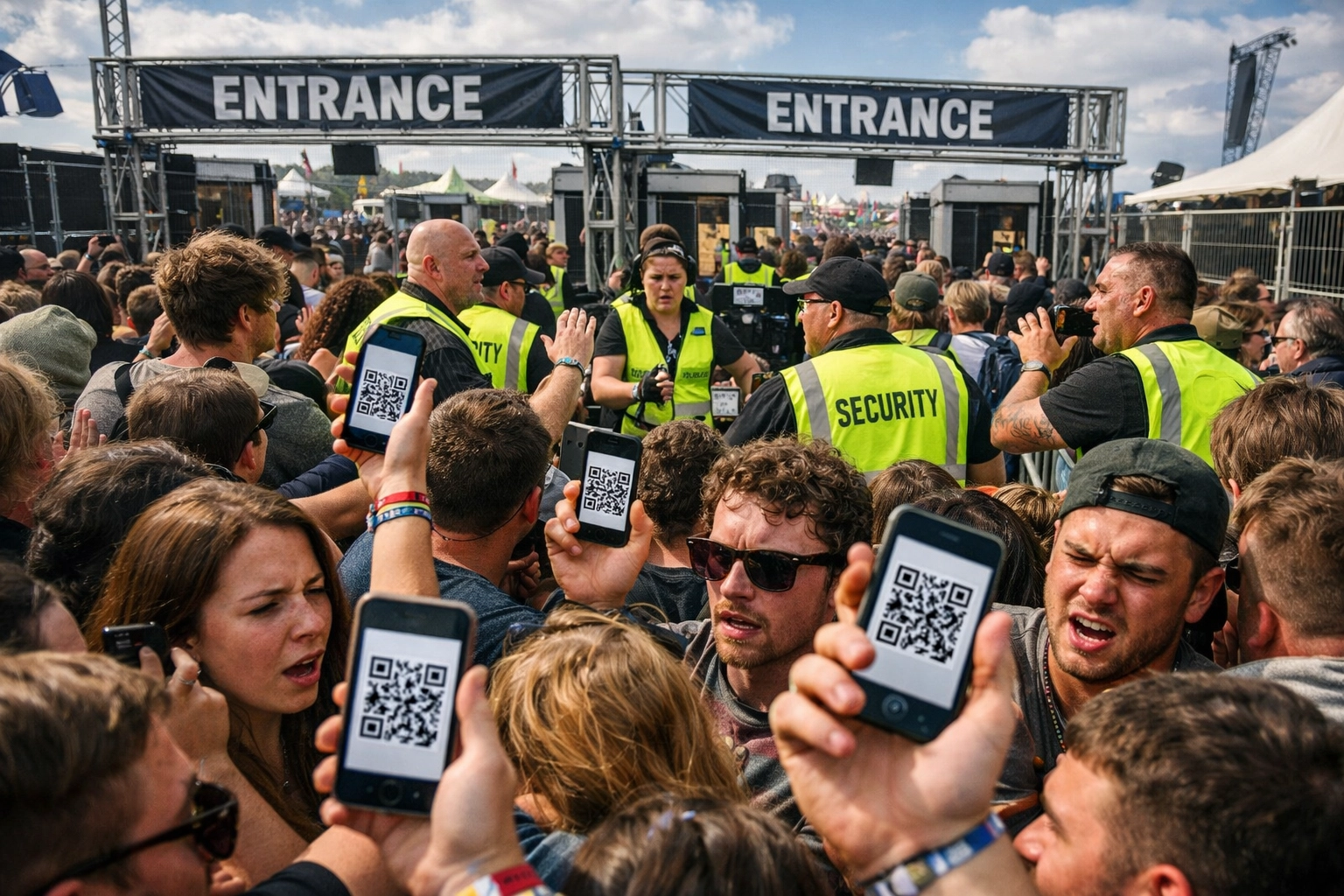
And even if you avoid the safety nightmare, you've still got an experience problem. Someone who's waited 40 minutes in a queue because your scanners kept timing out? They're starting their event already annoyed. That colours everything. Your social media reviews, your NPS scores, your rebooking rates: all take a hit.
The cost here isn't always immediate and obvious, but it's real. Unhappy attendees don't come back. They don't recommend you. And in a competitive events market, reputation is revenue.
Your Exhibitors Are Watching (And They're Taking Notes)
If you're running a trade show, expo, or conference with exhibitors and sponsors, connectivity isn't just your problem: it's theirs too.
Exhibitors rely on stable internet to:
Process lead capture and CRM updates in real-time
Run live product demos that need cloud access
Take payments at their booth
Video call remote team members or clients
Stream presentations or demos
When your event WiFi can't deliver, exhibitors notice. And they remember.
A company that's just paid £5,000–£20,000 for booth space expects the basics to work. If their demo crashed twice because of connectivity issues, or they lost 15% of their lead data because the scanning app couldn't sync, they're going to think twice about booking your event again next year.
Lost exhibitor rebookings aren't small money. For many B2B events, exhibitor revenue makes up 60–80% of total income. Losing even a handful of anchor exhibitors because of reputation damage can cost six figures.
And here's the kicker: unhappy exhibitors don't just leave quietly. They talk to their industry peers. Word spreads fast in tight professional communities.
The Social Media Blackout You Didn't Plan For
Let's talk about something organisers often overlook: your attendees are your marketing team.
Every Instagram Story. Every LinkedIn post from a conference session. Every Twitter thread live-tweeting a keynote. That's free, authentic, organic marketing. It's worth its weight in gold because it's peer-to-peer social proof that money can't buy.
But it only works if people can actually get online.
When your event WiFi is patchy or non-existent, that organic marketing engine stalls. Attendees give up trying to post. The event's social reach flatlines. Your hashtag dies.
Sure, some people will post later: but the magic of live content is the immediacy. Real-time updates create FOMO. They drive ticket sales for future events. They amplify your sponsors' visibility (which affects your ability to secure sponsorship deals next time).
There's no clean way to calculate the exact cost of a "social media blackout," but consider this: if 2,000 attendees would have each posted once with your event hashtag, reaching an average of 400 people, that's 800,000 organic impressions you've just lost. Try buying that level of authentic exposure through paid ads: it's expensive.
The Real Solution: Redundancy, Segmentation, and Expertise
So how do you actually protect your revenue from connectivity failure?
The honest answer is: you can't rely on a single internet connection. Not anymore. Not with this much riding on uptime.
This is where hybrid connectivity and proper network architecture come in. At Commsuk, we design systems with redundancy built in from day one:
Primary fibre or dedicated line for high-capacity, low-latency connectivity
Starlink or satellite backup that kicks in automatically if the primary connection drops
Bonded 4G/5G failover for an extra layer of protection
Segmented networks so that payment systems, production, ticketing, and guest WiFi don't compete for bandwidth
That last point is critical. Even if your overall connection is solid, poor network segmentation can still cause payment terminals to freeze or ticketing systems to lag because they're drowning in a sea of attendee TikTok uploads.
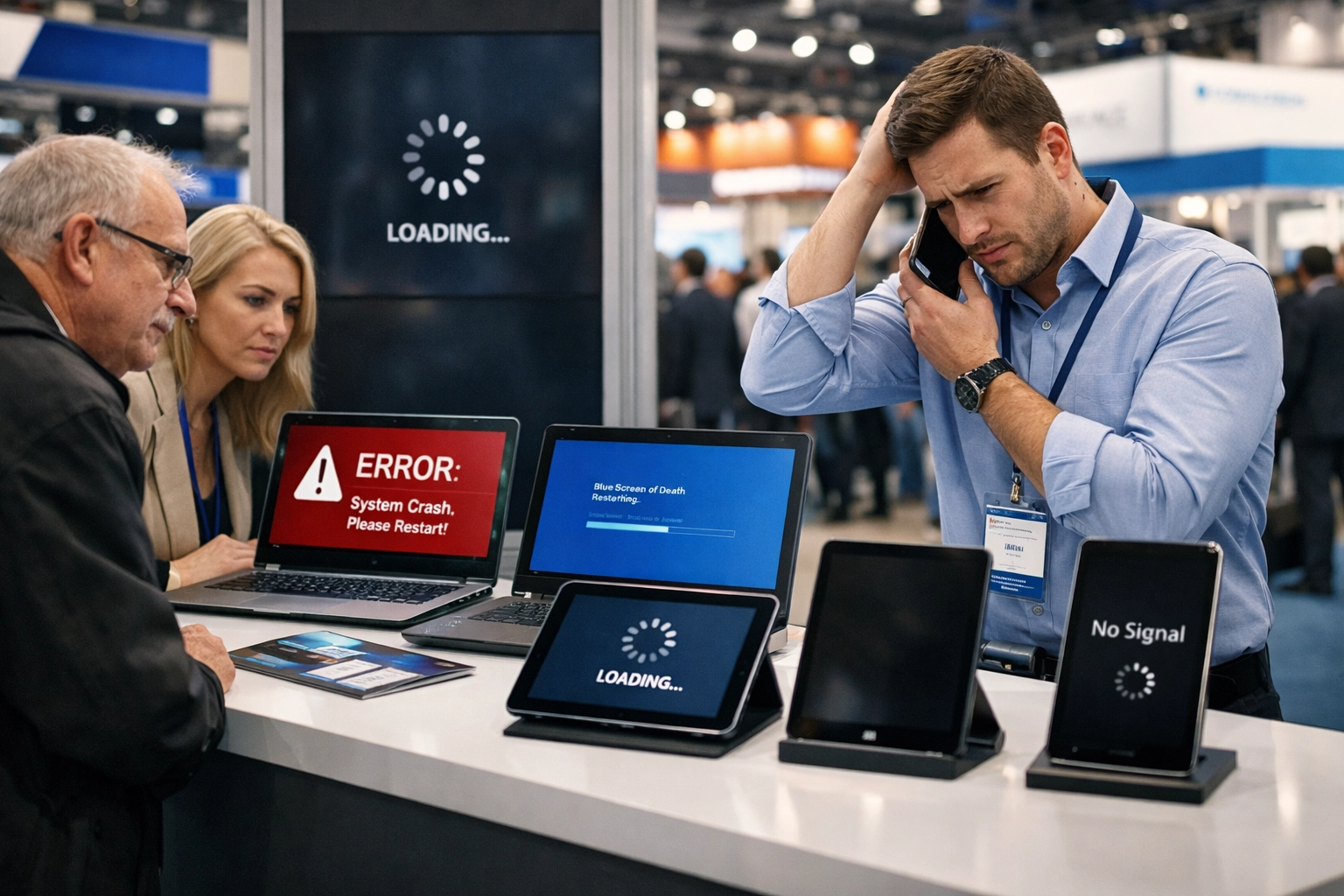
Our managed service approach means we're monitoring everything in real-time. If something starts to degrade, we catch it before it becomes a revenue problem: not after your finance team is trying to work out why Saturday's bar sales were 30% lower than expected.
What Downtime Really Costs
Let's be clear: the cost of proper event connectivity infrastructure is tiny compared to the cost of getting it wrong.
A weekend festival losing even 5% of its cashless revenue due to payment system outages could be looking at £50,000–£100,000+ in lost sales. A trade show that loses three major exhibitors because of connectivity complaints? That's potentially £30,000–£60,000 in lost rebookings.
Compare that to investing in professional, redundant connectivity with failover protection and dedicated support.
It's not even close.
And beyond the pure revenue calculations, there's the reputational cost. Trust is hard to build and easy to lose. One high-profile connectivity failure can haunt your event's reputation for years.
The Bottom Line
Event internet isn't a "nice to have." It's not just an IT concern.
It's revenue infrastructure.
Cashless payments, ticketing systems, exhibitor operations, and organic marketing all depend on it. When connectivity fails, money walks out the door: sometimes literally.
The good news? This is a solvable problem. With the right architecture, redundancy planning, and experienced support, downtime becomes a non-issue. Your payments process smoothly. Your gates flow efficiently. Your exhibitors stay happy. Your attendees post like crazy.
And your revenue stays exactly where it should be: in your bank account.
If you're planning an event and want to talk through your connectivity strategy: or if you've been burned by downtime before and want to make sure it never happens again: get in touch. We'll walk you through what proper event connectivity actually looks like in 2026.
Because the question isn't whether you can afford reliable internet.
It's whether you can afford not to have it.
Comments