The Ultimate Guide to Event Bandwidth: Everything You Need to Succeed Without Going Offline
If there is one question that keeps event organisers awake at night: somewhere between "did I order enough catering?" and "will the keynote speaker show up?": it’s the internet. Specifically: "How much bandwidth do we actually need?"
In the early days of events, a basic ADSL line was a luxury. Today, if the WiFi drops for ten seconds, the social media coverage stops, the card machines stop, and the "vibe" evaporates instantly. At Commsuk Limited, we spend our lives answering this question. And here is the secret we usually tell our clients over a coffee: it’s not just about the raw speed. It’s about how you manage it.
The "How Much?" Myth
Most people think of bandwidth like a speed limit on a motorway. They think if they have "100 Meg," they are safe. But event bandwidth is more like a plumbing system. You can have a massive main pipe coming into the building, but if everyone tries to flush the toilet at the exact same time, the pressure drops to zero.
When you ask us how much you need, we don't just look at your attendee count. We look at what those attendees are actually doing.
A conference for 500 developers who are all downloading software updates and live-streaming in 4K requires a vastly different setup than a 500-person wedding where people are just posting a few photos to Instagram.
Bursty Traffic vs. Steady Usage: The Invisible Enemy
This is where most DIY event WiFi setups fail. They plan for the "average" usage, but events don't happen in averages. They happen in peaks.
The "Bursty" Traffic
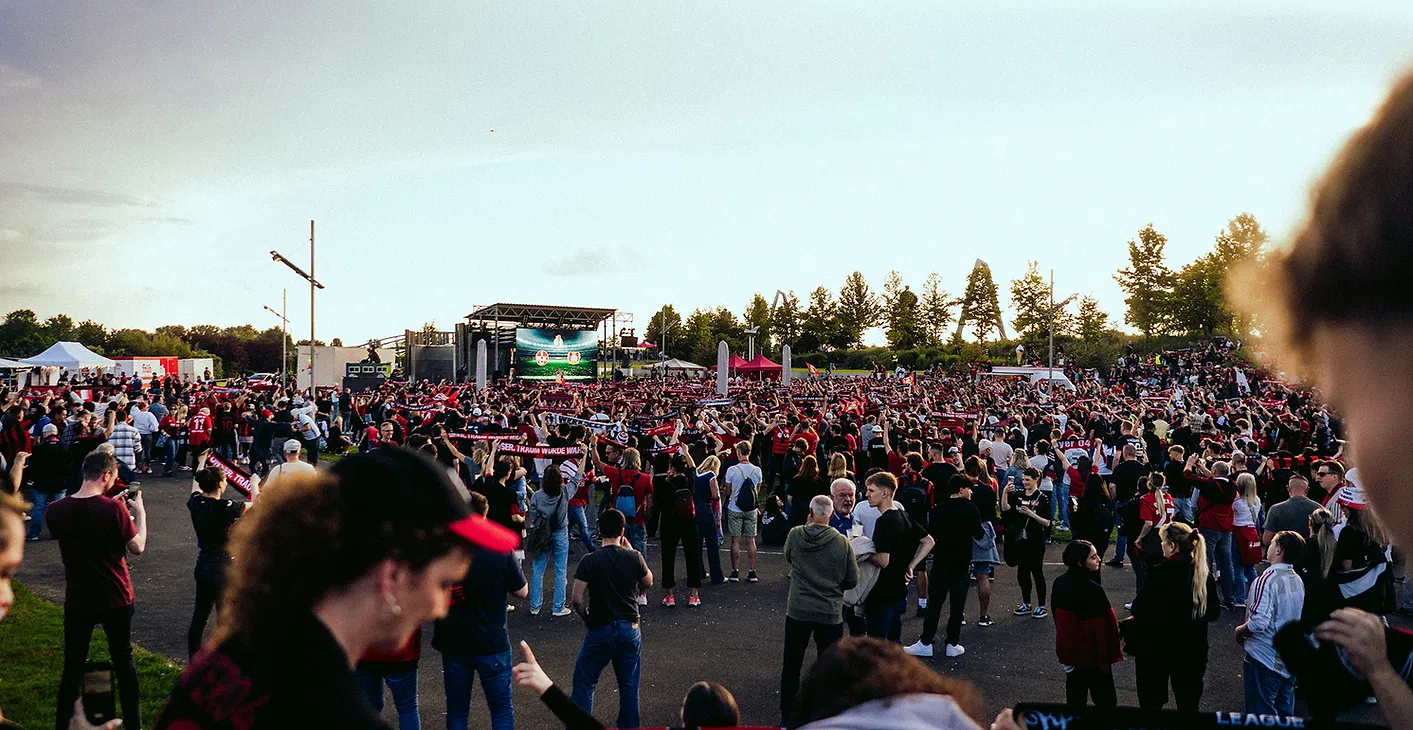
Think about the moment your gates open. You have 2,000 people arriving at once. Every single one of them needs their digital ticket scanned. The scanners need to talk to the cloud. At the same time, those 2,000 people are all joining the guest WiFi and their phones are immediately checking for emails, syncing photos, and updating apps.
This is "bursty" traffic. It’s a sudden, violent surge in demand. If your network isn't configured to prioritise those ticket scanners, your entry line will grind to a halt while someone’s phone in the back row finishes downloading a TikTok update.
The "Steady" Usage
Then you have your exhibitors. They might be running a demo on a big screen or hosting a web-based platform. This is "steady" usage. It doesn't spike as hard, but it’s constant. If the steady usage eats up all the "headroom" in your connection, there’s no room left for the bursts.
At Commsuk, we use something called Traffic Shaping. We essentially build dedicated lanes on your "internet motorway." We make sure the ticket gates have their own VIP lane that can’t be blocked by general attendee traffic.
Practical Rules of Thumb
While every event is unique, we know you need some numbers to start your planning. If you’re looking at your plans and pricing, here are some rough estimates for "Light" to "Medium" usage:
Small Meetings (Up to 50 people): 20 Mbps - 50 Mbps. Usually enough for basic emails and some light web browsing.
Medium Events (100 - 500 people): 100 Mbps - 250 Mbps. This covers social media, event apps, and basic presentation streaming.
Large Festivals or Conferences (1,000+ people): This is where you need a managed 500 Mbps to 1 Gbps line. At this scale, it’s less about the total speed and more about the number of access points distributed across the site.
Keep in mind, these are for general WiFi. If you are doing a high-def live stream, you need to add a dedicated "Upload" buffer specifically for that.
Why Upload is the Unsung Hero
Most home internet packages brag about "Download Speed." You see "100Mbps Download!" in big bold letters. But for events, Upload is often more important.
If you are a vendor taking payments via a card machine, you are uploading data to the bank. If you are a speaker streaming your talk to a remote audience, you are uploading video. If you have 50 journalists filing stories and photos, they are uploading.
When we set up a site: whether it’s a rural field or a city rooftop: we focus heavily on symmetrical speeds. We want to ensure that your "outbound" data is just as fast as your "inbound" data.
Monitoring the Heartbeat
The reason our clients feel reassured is that we don’t just "plug it in and hope."
During an event, we monitor the bandwidth in real-time. We can see the moment a specific area of your venue starts to "choke" because too many people have gathered there. We see the spikes before they become problems.
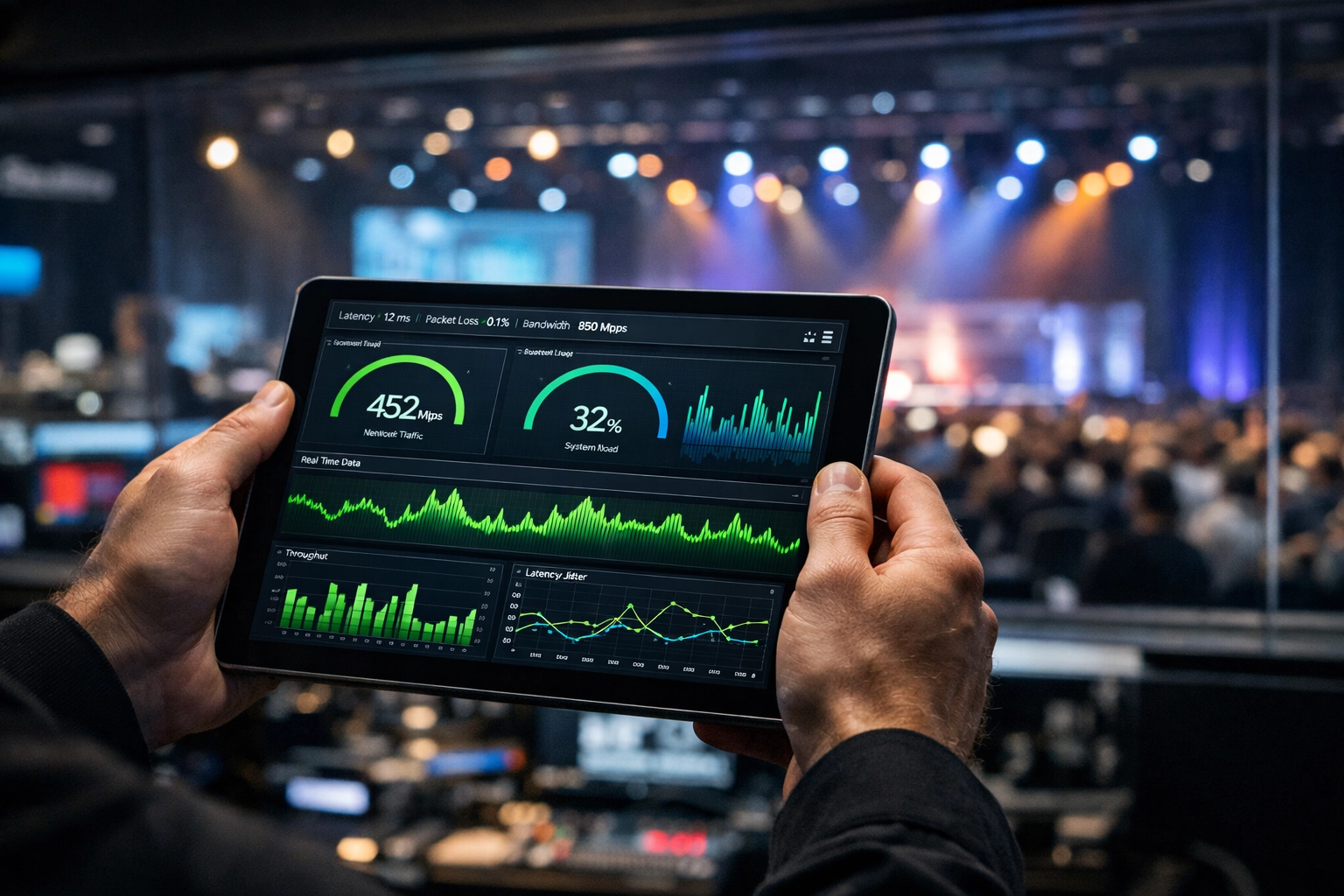
If we notice the ticketing gates are struggling, we can instantly shift more resources to that "lane" from the general public WiFi. It’s a dynamic, living system. We stay on top of the technical details so you can focus on making sure the event itself is a success. You can see more about our approach on our About page.
The Commsuk Safety Net: Redundancy
In the world of live events, "Plan A" is never enough. Cables get tripped over, local exchanges go down, or a rogue digger hits a fiber line three miles away.
That’s why we believe in the "Belt and Braces" approach. We often combine multiple technologies to create a single, unbreakable connection. We might use a high-speed satellite link (like Starlink) bonded with multiple 5G carriers. If one fails, the other takes over in milliseconds. Most of the time, the organiser doesn't even know there was a glitch.
A Minimalist Checklist for Your Next Event
If you’re currently in the planning stages, don't get bogged down in the jargon. Ask yourself these four questions:
What is the "Mission Critical" stuff? (e.g., card machines, ticketing, live stream).
When are the peaks? (e.g., registration, lunch breaks, keynote).
Are there exhibitors who need dedicated lines?
What happens if the main line goes down?
If you can’t answer the fourth one, you might need a bit of help. Whether you are running a small pop-up shop or a massive outdoor festival, having a dedicated partner to manage these "lanes" makes all the difference.
Remote and Rural? No Problem.
A lot of the most exciting events happen in places where the internet usually doesn't go: middle of a forest, a farm, or a historic estate. We’ve even brought high-speed WiFi to events where the only other "tech" on-site was a John Deere tractor.
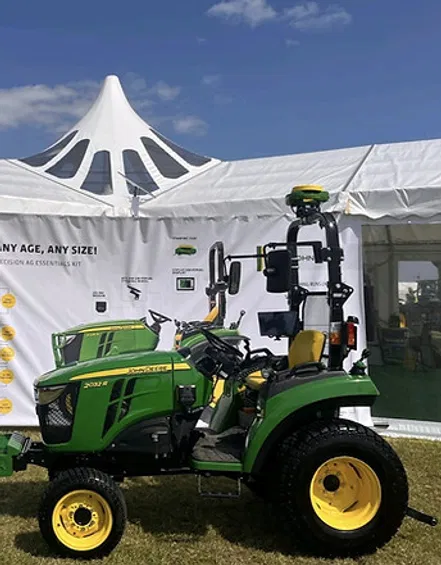
Distance doesn't have to mean disconnection. With modern satellite and cellular bonding, we can deliver "city speeds" to the most remote corners of the UK.
Final Thoughts
Bandwidth doesn't have to be a dark art. It’s simply a matter of understanding the flow of your event and having the right tools to manage the peaks.
If you're worried about your upcoming event or just want a second opinion on your connectivity plan, feel free to contact us. We’re here to make sure you stay online, your vendors keep selling, and your attendees keep posting: without you having to worry about a single byte.
Want to dive deeper into specific tech? Check out our latest blog posts or see how we can help you book a service online.
Stay connected. We've got your back.
Comments