Hybrid Event Connectivity Explained in Under 3 Minutes: Why Smart Organisers Mix Satellite and 5G
Picture this: You're running a food festival in a beautiful but remote countryside location. The views are stunning, the atmosphere is perfect, and then: disaster strikes. The local broadband can't handle 500 people trying to share photos, process card payments, and livestream simultaneously. Your event grinds to a halt.
This scenario plays out more often than you'd think. But smart event organisers in 2026 have cracked the code by mixing satellite and 5G connectivity. It sounds technical, but it's actually dead simple once you get it.
What Is Hybrid Event Connectivity?
Hybrid event connectivity is like having multiple backup plans for your internet, all working together at the same time. Instead of relying on just one type of connection (like hoping the venue's WiFi holds up), you combine different technologies to create a bulletproof network.
Think of it like this: if your event internet was a three-legged stool, you wouldn't want all three legs made from the same wobbly material. You'd want each leg to be strong in different ways, supporting each other when one wobbles.
That's exactly what happens when you combine satellite and 5G. Each technology has superpowers in different situations, and when you use them together, you get connectivity that can handle almost anything.
When Satellite Saves the Day
Let's talk about those remote locations where satellite really shines. Remember that countryside food festival? Here's where satellite becomes your best friend.
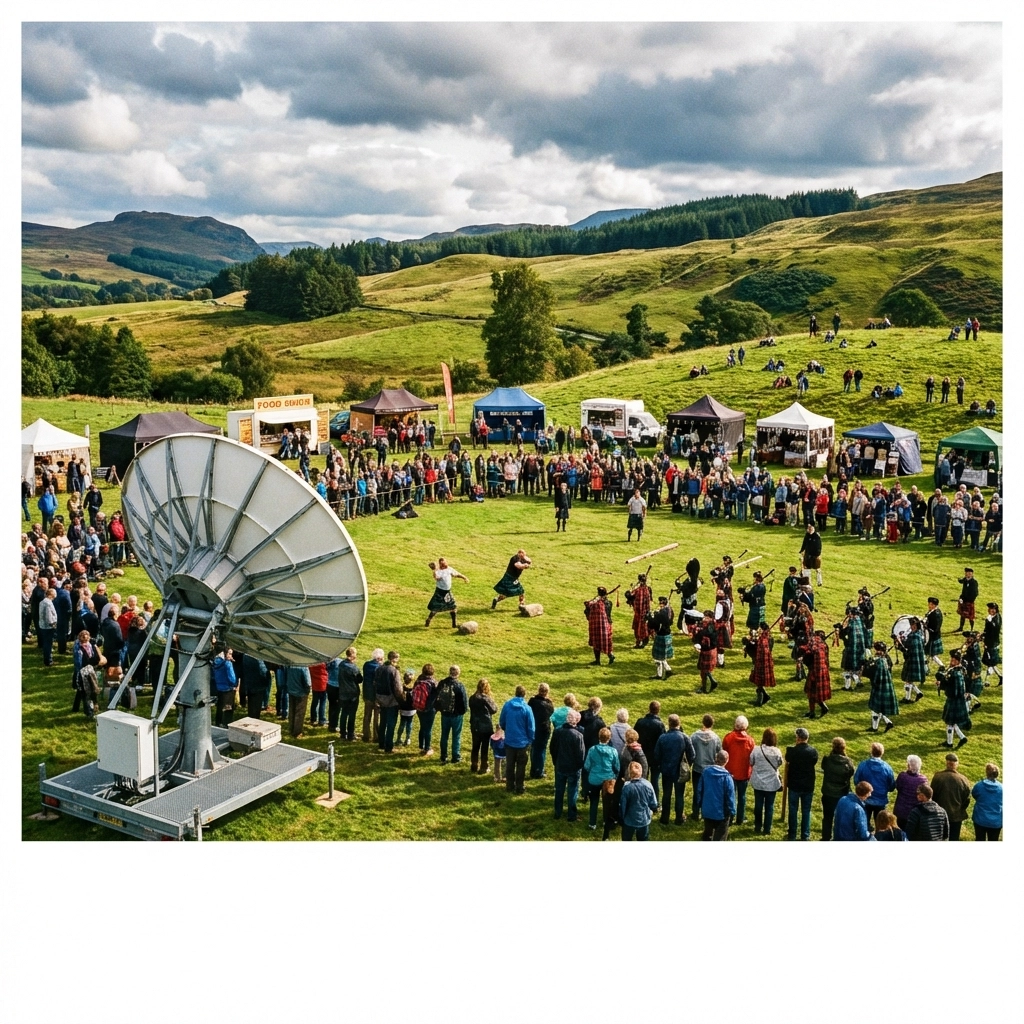
The Highland Games Scenario: Last summer, we worked on a traditional Highland Games event in the Scottish Highlands. Beautiful setting, but the nearest mobile tower was 15 miles away, and the local broadband was about as reliable as the weather forecast. We deployed satellite internet as the primary backbone.
Within 30 minutes of setup, we had rock-solid connectivity covering the entire event grounds. Competitors could upload their training videos, spectators shared their photos instantly, and the food vendors processed hundreds of contactless payments without a hitch. The satellite connection didn't care about the remote location: it just worked.
Agricultural Shows and Farm Events: These are classic satellite territory. When you're dealing with events spread across vast farm fields, traditional infrastructure often can't reach. Satellite provides consistent coverage whether you're at the main arena or tucked away at the craft beer tent behind the sheep sheds.
The beauty of satellite is its consistency. Unlike terrestrial connections that can vary wildly based on location, satellite gives you the same reliable performance whether you're in central London or the middle of nowhere.
How 5G Handles the Heavy Lifting
Now, let's flip the script and talk about when 5G becomes the star of the show.
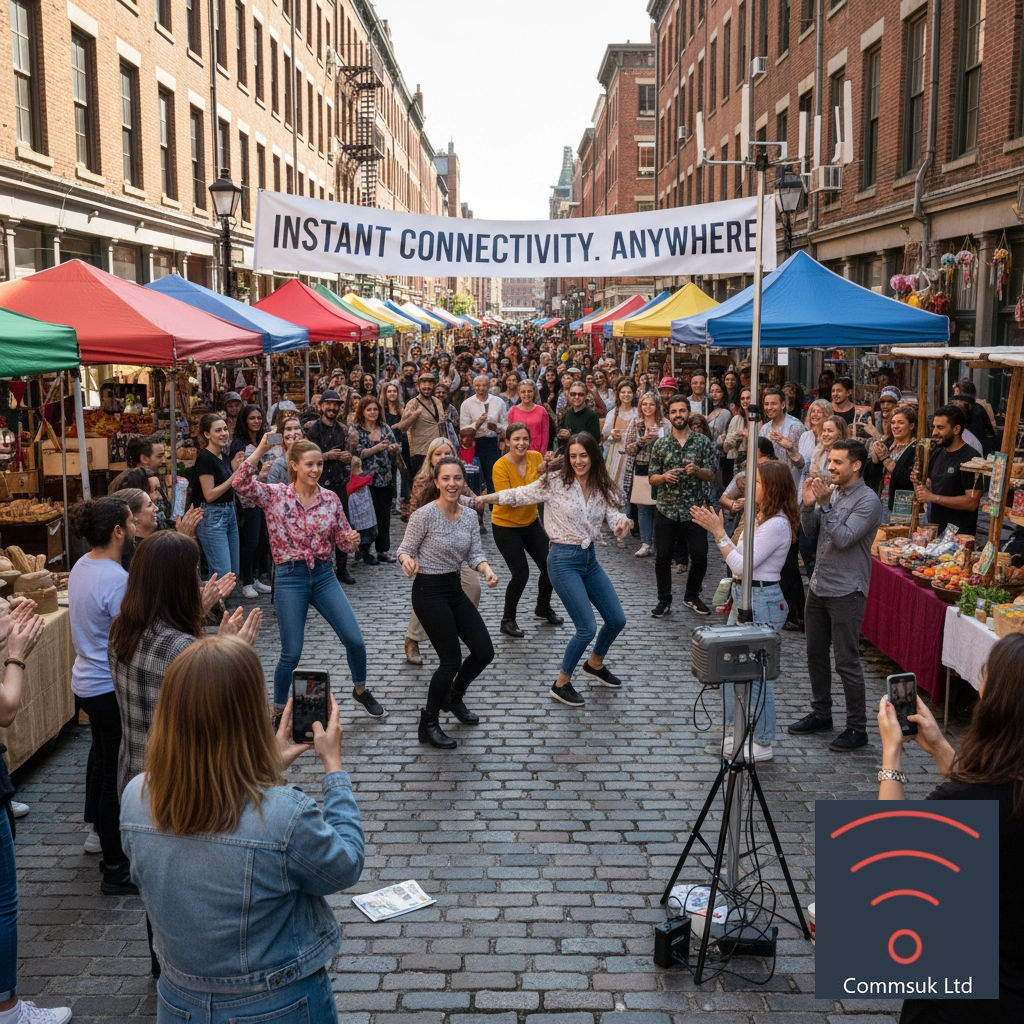
The Pop-Up Festival Surge: Picture a trendy pop-up event in East London. You've got 1,000+ young attendees, all armed with the latest smartphones, filming TikToks, posting Instagram stories, and streaming live videos simultaneously. This is where 5G absolutely shines.
The sheer bandwidth that 5G provides means you can handle massive spikes in usage without breaking a sweat. When that surprise guest performer takes the stage and everyone starts livestreaming at once, 5G just absorbs the demand like a sponge.
Urban Event Spaces: For events in cities where 5G infrastructure is well-developed, the technology provides incredible speed and low latency. This matters more than you might think: when exhibitors are running live product demos that depend on real-time data, or when you're streaming high-quality video to remote participants, that split-second delay can make or break the experience.
Why Mix Both Technologies?
Here's where the magic happens. Smart organisers don't choose between satellite and 5G: they use both strategically.
Redundancy That Actually Works: If your 5G connection hits a snag (maybe there's unexpected interference, or the local tower gets overwhelmed), your satellite connection seamlessly picks up the slack. Your event keeps running smoothly while other organisers are frantically calling their internet providers.
Coverage Where It Matters: Use 5G for high-traffic areas where you need maximum speed and capacity, then rely on satellite to fill in coverage gaps or provide connectivity to remote areas of your event space. It's like having the best of both worlds working together.
Load Balancing: Clever setup allows you to automatically distribute internet traffic across both connections based on what each technology handles best. Streaming and real-time applications can prioritise the low-latency 5G, while file uploads and general browsing can use the reliable satellite connection.
The Real Benefits for Everyone Involved
For Event Organisers: You sleep better at night knowing your connectivity won't fail. No more nightmare scenarios where your entire event grinds to a halt because of internet problems. Plus, you can confidently take on events in locations that other organisers avoid because of connectivity challenges.
For Exhibitors: Reliable internet means they can actually showcase their products properly. Their interactive demos work flawlessly, their payment systems never drop out, and they can capture leads and process orders without technical hiccups. Happy exhibitors mean better events and more likely return customers.
For Attendees: Nobody likes an event where they can't share their experience or access the event app. With hybrid connectivity, your guests get seamless internet access whether they're right by the main stage or exploring the furthest corners of your event.
Looking Ahead: Why This Matters More in 2026
The events landscape has evolved dramatically. Hybrid and remote participation isn't just a nice-to-have anymore: it's expected. Your attendees might be physically present, but they're also sharing experiences in real-time with friends around the world.
Event apps are getting more sophisticated, requiring stable connections for features like AR treasure hunts, real-time polling, and interactive maps. Exhibitors are running more complex digital experiences that simply won't work with patchy internet.
Meanwhile, the expectation for seamless connectivity has never been higher. Your attendees carry devices that can stream 4K video and download movies in minutes at home. They don't make allowances for "event internet": they expect the same performance regardless of location.
The Simple Truth About Hybrid Connectivity
Here's what it comes down to: mixing satellite and 5G isn't about showing off with fancy technology. It's about removing internet connectivity as a potential point of failure for your event.
When you've got months of planning, significant budgets, and reputations on the line, why leave connectivity to chance? Smart organisers hedge their bets by using multiple technologies that complement each other.
The best part? Setting up hybrid connectivity isn't as complex as it sounds. With the right partner, you can have both technologies working together seamlessly, automatically managing the load and switching between connections as needed.
Your attendees won't even know they're using a sophisticated hybrid setup: they'll just notice that everything works perfectly, every time. And that's exactly how it should be.
Whether you're planning a tech conference in a Manchester warehouse, a wedding in a Yorkshire dale, or a product launch in a London pop-up space, hybrid connectivity gives you the confidence to focus on creating amazing experiences instead of worrying about whether the internet will hold up.
At Commsuk, we've been helping event organisers solve connectivity challenges across every type of venue and location imaginable. From remote Highland gatherings to bustling city centre launches, we bring together satellite, 5G, and whatever other technologies your specific event needs. Because when it comes to event connectivity, one size definitely doesn't fit all: but the right combination of technologies can handle anything you throw at it.
Comments