No Signal? No Problem: Bringing Fiber-Fast WiFi to the Middle of Nowhere
You've found the perfect field. It's got stunning views, room for 5,000 guests, and zero planning restrictions. There's just one tiny problem: your phone shows 'No Service', and the nearest cellular tower is about fifteen miles away.
Welcome to the reality of rural event planning.
The Remote Event Dilemma
Running an event in the middle of nowhere sounds idyllic until you remember that modern events literally cannot function without connectivity. We're not talking about guests checking Instagram (though they will). We're talking about the actual operational backbone of your event grinding to a halt.
No signal means:
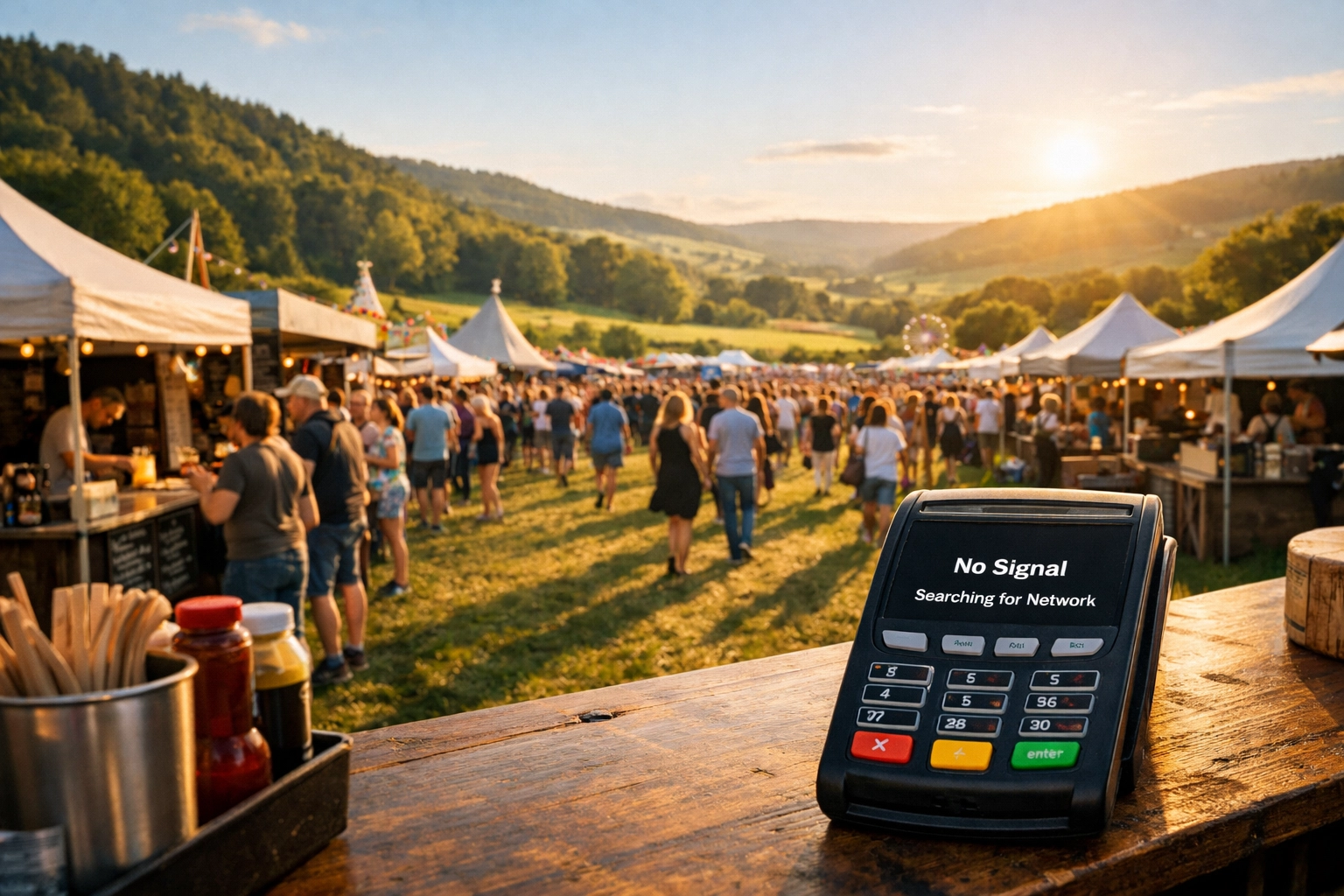
Card machines don't work (goodbye vendor sales)
Security teams can't communicate
Medical teams can't access records or call for backup
Your ticketing system is basically decorative
Live streaming? Forget it
Social media coverage? Nonexistent
Agricultural shows, music festivals in rural fields, remote weddings, outdoor corporate retreats, they all face the same problem. The location is perfect, but the infrastructure is from 1987.
Why 'Just Use Mobile Data' Doesn't Cut It
Someone always suggests this. "Can't people just use their phone data?"
Sure, if you want fifty guests fighting over the one spot where Three gets half a bar of signal. And good luck processing payments when your card reader is desperately searching for 4G that doesn't exist.
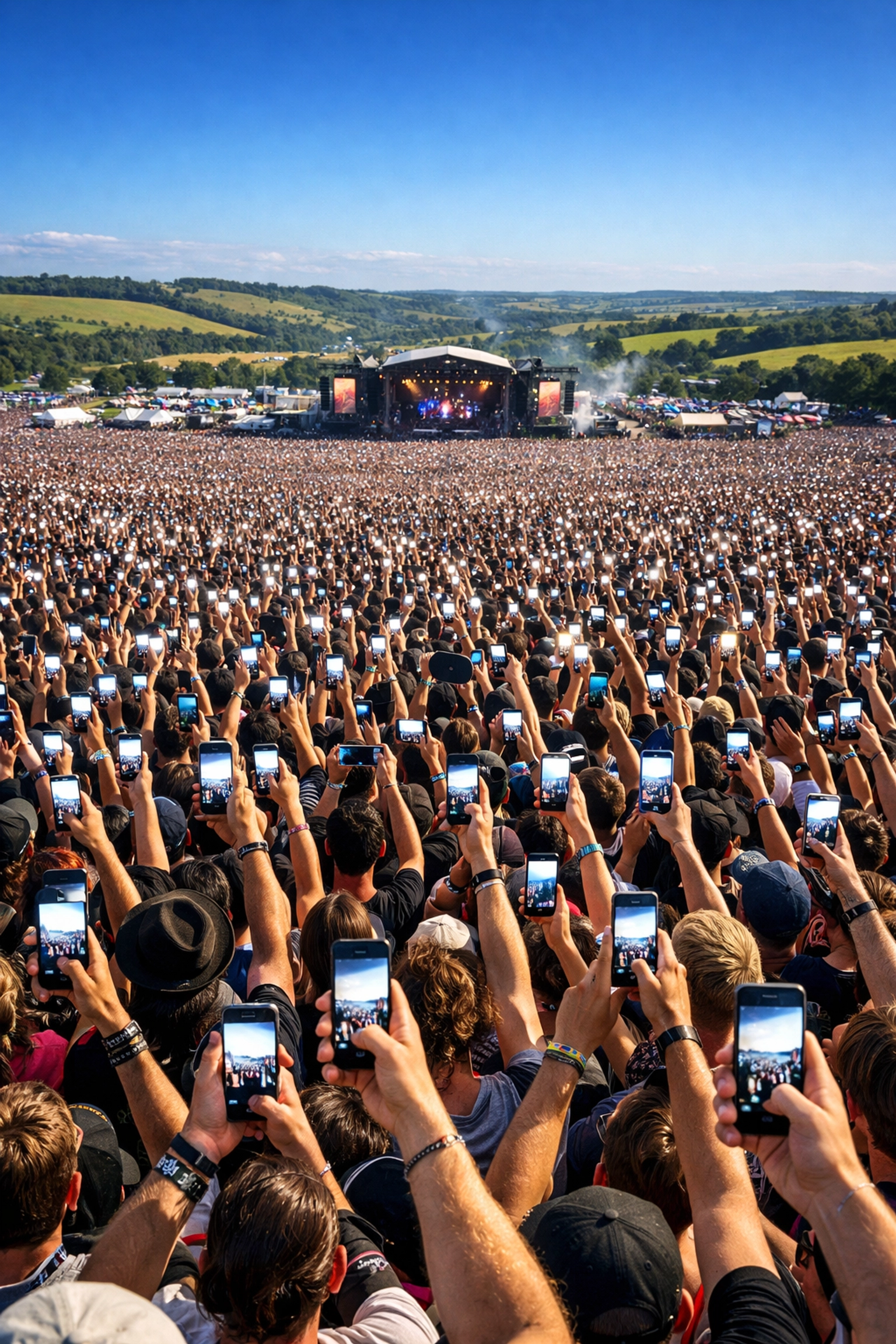
Even when there is some patchy mobile coverage, it's not designed for density. A few hundred people trying to connect simultaneously will overwhelm even decent rural signals. The mast isn't expecting a sudden population surge of livestreamers and contactless payments.
Rural cellular infrastructure is built for the handful of locals who live there year-round, not for your 2,000-person festival that just appeared overnight.
The Old Solution (That Didn't Really Work)
Ten years ago, organisers had limited options. You could:
Run kilometers of temporary fiber from the nearest exchange (eye-wateringly expensive)
Use bonded 4G routers and pray (unreliable in rural areas)
Just... not have internet (and accept that your event would be stuck in the dark ages)
None of these were particularly good. Fiber installation costs can hit £27,000 per mile, and that's assuming the infrastructure even exists nearby. Bonded 4G only works if there's 4G to bond in the first place. And operating without connectivity in 2026? That's not rustic charm, that's operational suicide.
The dream was always to have fiber-level speeds without needing to physically connect to anything. Just rock up, switch on, and you're online.
Enter Satellite Technology (The Grown-Up Version)
Satellite internet used to be a punchline. Slow, laggy, expensive, and about as reliable as British summer weather. If you'd suggested using it for an event in 2015, people would have laughed you out of the planning meeting.
But satellite tech in 2026 is a completely different beast.
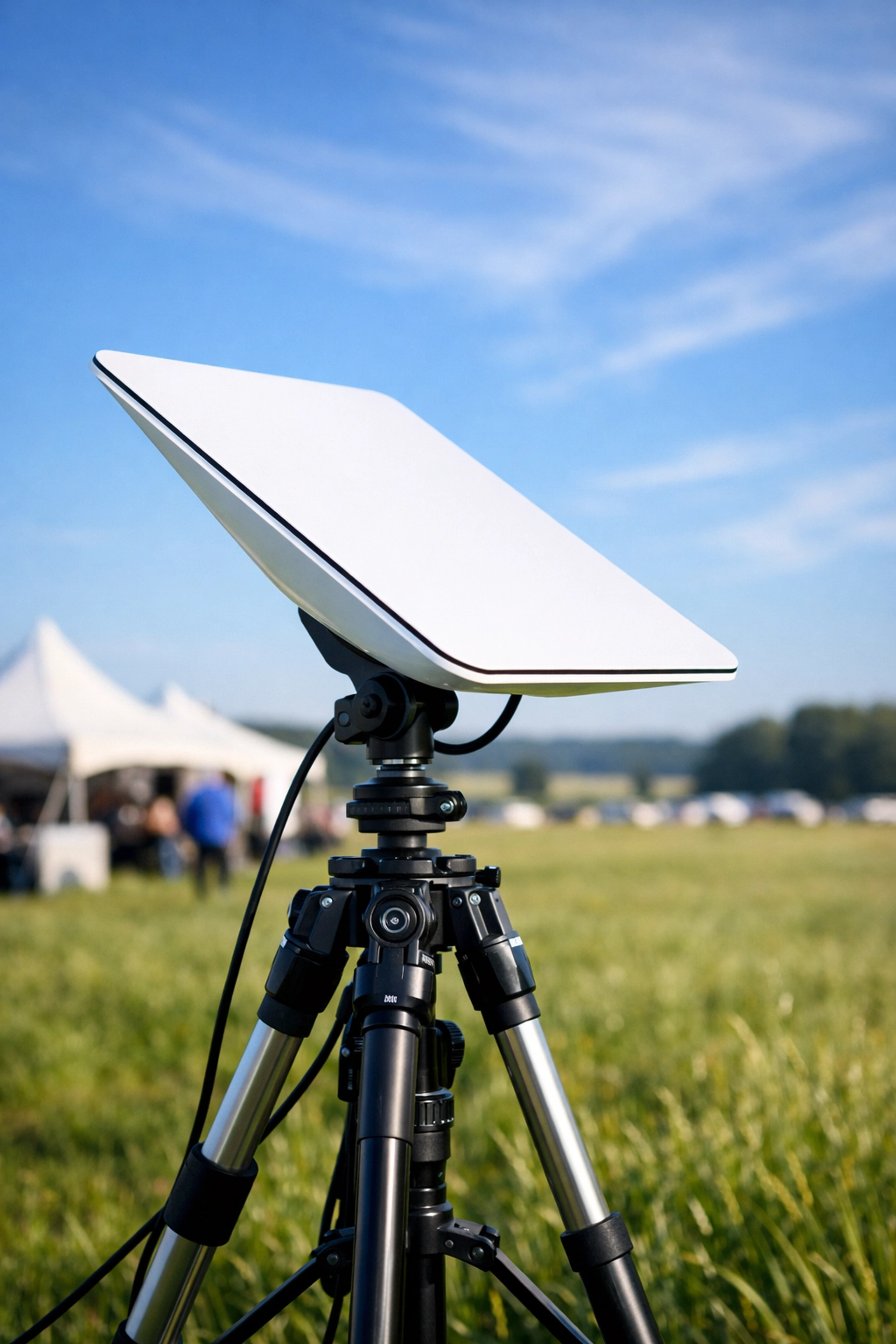
Modern low-earth orbit satellite systems like Starlink have changed the game entirely. Instead of connecting to a satellite 35,000 kilometers away (old geostationary systems), newer constellations orbit at just 550 kilometers up. The result? Speeds that genuinely rival fiber, with latency low enough for video calls and live streaming.
We're talking 100-300 Mbps download speeds. In a field. With cows.
At Commsuk, we've built our entire rural event solution around this technology. We combine Starlink with backup 4G/5G systems (where available) to create what we call a "connectivity bubble": a zone of fiber-fast WiFi that simply shouldn't exist in the middle of nowhere, but does.
How It Actually Works (The Non-Technical Version)
Our setup process is refreshingly simple:
We arrive with our kit. This includes satellite dishes, routers, and access points.
We point at the sky. The dish auto-aligns to find satellites (takes about five minutes).
You're online. Properly online. Fast enough for card payments, live streaming, WhatsApp, the lot.
There's no digging, no cabling running across fields, no waiting for BT Openreach to maybe show up next Tuesday. The internet comes from space, and it works.
We typically deploy multiple access points around your site to ensure coverage everywhere: from the main stage to the furthest food vendor. Guests and staff connect just like they would to any other WiFi network. They don't need to know there's satellite tech involved. It just works.
Real-World Use Cases
Rural Weddings: A 200-guest wedding in the Scottish Highlands needed connectivity for their live stream to relatives abroad, plus card payments for the bar. The venue's existing "WiFi" was one router in the office that barely reached the car park. We deployed a full Starlink system that covered the entire grounds. The bride's uncle in Australia watched the ceremony in HD. The bar took £8,000 in contactless payments. Everyone went home happy.
Agricultural Shows: These events are almost always in genuinely remote locations: that's kind of the point. But modern agricultural shows need serious connectivity for vendor payments, livestock registration systems, and live streaming competitions. We regularly deploy multi-access point networks that handle thousands of simultaneous connections across muddy fields.
Festival Production: Music festivals need rock-solid internet for everything from ticketing to production comms to media streams. When your event is in a field with no infrastructure, satellite is often the only viable option. We've powered festivals with 10,000+ attendees using purely satellite backhaul.
The Backup Plan (Because Rural Is Unpredictable)
Here's the thing about rural connectivity: Mother Nature doesn't care about your event schedule. Heavy rain can affect satellite signals. Storms happen. That's why we never rely on a single connection method.
Our systems automatically failover between:
Primary satellite connection (Starlink)
Secondary satellite (different provider)
4G/5G bonding (where any signal exists)
If one drops, the others pick up the slack instantly. Your payment terminals don't even notice. This hybrid approach means we can genuinely promise uptime that rivals urban fiber connections, even when you're hosting an event next to Stonehenge.
What This Means For Event Organisers
You don't have to compromise anymore. That perfect venue with no infrastructure? It's now a viable option. The remote location that would elevate your event from good to unforgettable? You can actually use it.
Remote no longer means offline. It just means we point slightly more dishes at the sky.
The setup cost is transparent and significantly cheaper than running temporary fiber. We can be operational within hours of arriving on site. And when your event's over, we pack up and leave: no cables to remove, no trenches to fill in.
The Future (Which Is Already Here)
Satellite technology is only getting better. New constellations are launching constantly, speeds are increasing, and latency is dropping. What we're deploying today would have seemed like science fiction five years ago.
For rural events, this is genuinely revolutionary. The infrastructure gap that has always existed between urban and rural venues is closing fast. Your field in the middle of nowhere can now have the same connectivity as a London exhibition center.
We've been deploying these systems for events across the UK for the past two years, and the feedback is always the same: "I can't believe this actually works."
Neither could we, at first. But it does. Every time.
Getting Started
If you're planning an event in a location where mobile signal goes to die, get in touch. We'll check your site coordinates, confirm satellite coverage (it's almost everywhere in the UK), and give you a quote.
Your remote event doesn't have to feel remote. It just has to be connected.
Comments