Payment Failures at Events: Why Your WiFi Setup Could Be Bankrupting Your Business
Picture this: It's Saturday afternoon at your music festival. The headline act is about to take the stage, thousands of punters are queuing for drinks, and your bars are doing brilliant business. Then suddenly, your payment systems crash. Card readers go offline. Your ticketing app stops working. The beer taps might as well be pouring liquid gold because nobody can pay for anything.
Welcome to every festival organiser's worst nightmare – and it's happening more often than you'd think.
The DIY WiFi Trap That's Costing Events Millions
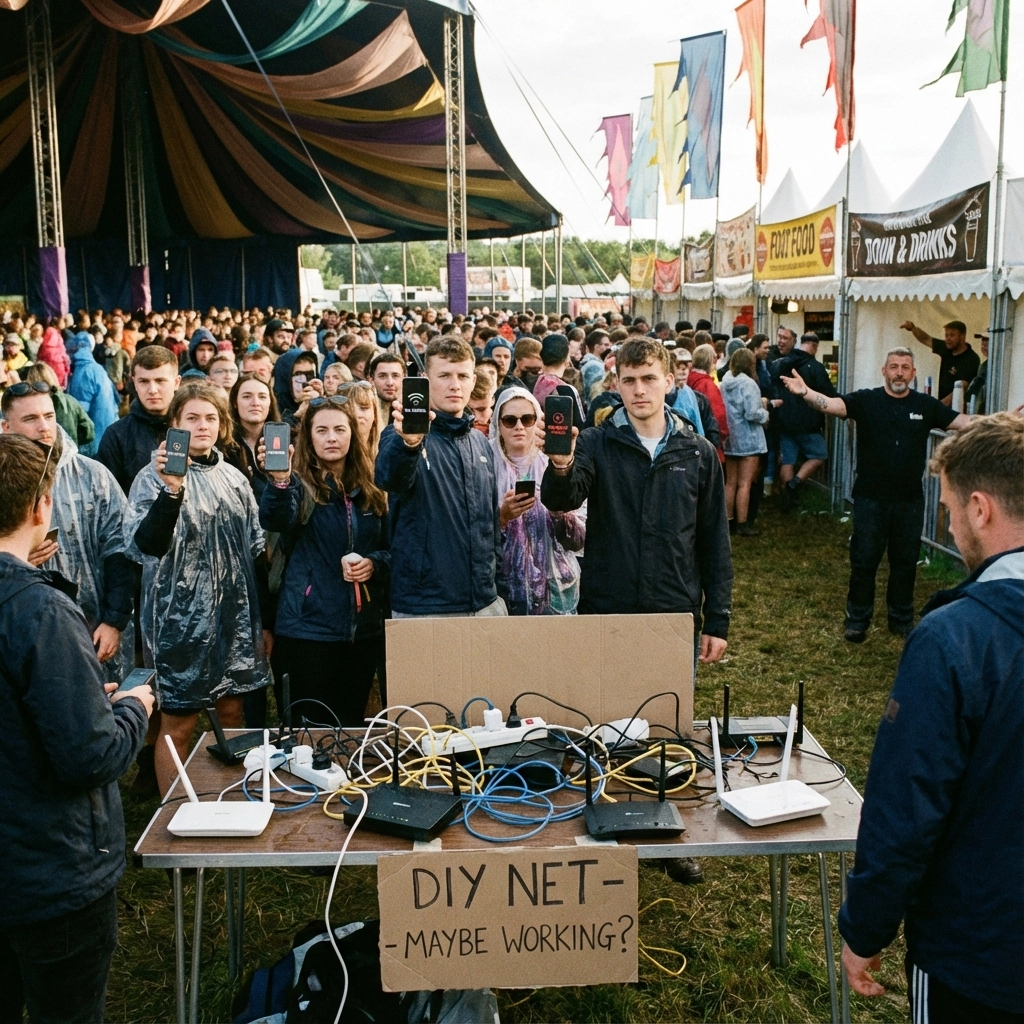
Here's the thing about festival WiFi: it looks deceptively simple from the outside. Chuck up a few routers, get some decent broadband, job done, right? Wrong. Dead wrong.
We've seen it countless times – event organisers trying to save a few quid by cobbling together their own WiFi setup, only to watch their entire revenue stream collapse when thousands of people try to connect simultaneously. What seems like a smart cost-cutting measure quickly becomes the most expensive mistake you'll ever make.
The problem isn't just about slow internet for Instagram uploads (though your attendees won't thank you for that either). When your DIY WiFi setup buckles under pressure, it takes your payment infrastructure down with it. Every card reader, every mobile payment terminal, every ticket scanner – they all need stable, reliable connectivity to function.
When Payment Systems Fail, Everything Falls Apart
Let's talk about what actually happens when your WiFi can't handle the load and your payment systems start failing. It's not just an inconvenience – it's an existential threat to your entire event.
Your Bar Revenue Vanishes Overnight
Your bars are profit centres, not charity operations. When card payments stop working, you're not just losing the odd pint sale. You're losing hundreds, sometimes thousands of transactions per hour. Most people don't carry cash anymore, especially not enough to cover a full day of festival drinking and eating.
We've seen festivals lose 60-70% of their bar revenue in a single afternoon because their DIY WiFi setup couldn't handle the payment processing load. That's not just disappointing – for many events, that's the difference between profit and bankruptcy.
Ticketing Chaos at the Gates
Your entrance becomes a nightmare. Mobile tickets won't scan, wristband systems go offline, and suddenly you've got thousands of frustrated punters queuing in the rain while your staff frantically try to sort out who's paid and who hasn't. Some events have had to let people in for free rather than risk a crowd control disaster.
Vendor Payments Stop Dead
Your food vendors, merchandise stalls, and service providers all rely on the same connectivity for their payment systems. When WiFi fails, they can't take payments either. Suddenly, your entire event ecosystem grinds to a halt, and everyone's pointing fingers at the organiser – you.
The Hidden Costs of DIY WiFi Disasters
The immediate revenue loss is obvious, but the hidden costs are what really hurt. Here's what most organisers don't factor in when they're trying to save money on professional WiFi:
Staff Overtime and Crisis Management
When payment systems fail mid-event, your entire team drops everything to firefight. Security staff become cash collectors, bar managers turn into IT troubleshooters, and your event coordinators spend their time apologising to angry vendors instead of managing the show.
Refunds and Compensation Claims
Attendees who can't buy food or drinks because your systems are down don't just shrug it off. They want refunds, compensation, or free tickets to your next event. Vendors whose sales collapse because of your WiFi failures will come knocking for compensation too.
Insurance and Legal Issues
Many event insurance policies don't cover losses from "inadequate infrastructure provision." If your DIY WiFi setup causes payment failures that cost you significant revenue, you might find yourself fighting an uphill battle with insurers who consider it a self-inflicted wound.

Real-World WiFi Horror Stories
We've seen festivals where organisers thought they were being clever, setting up their own network using consumer-grade equipment from the local electronics shop. Here's what typically goes wrong:
The "Good Enough" Router Setup
One festival organiser bought six high-street WiFi routers and scattered them around their 10,000-capacity site. Worked fine during soundcheck with 20 people connected. Come festival day, with thousands of devices trying to connect simultaneously, the network collapsed within an hour. Payment systems couldn't get through the congestion, bars had to go cash-only, and they lost an estimated £40,000 in sales that weekend alone.
The Venue WiFi Gamble
Another event relied on their venue's existing WiFi, thinking it would be sufficient. What they didn't realise was that the venue's internet was designed for maybe 50 conference delegates, not 5,000 music fans all trying to livestream to social media while buying drinks. The network couldn't handle the payment processing load, and by Saturday evening, half their revenue streams had dried up.
The Single Point of Failure Disaster
Perhaps the worst we've seen was a festival that put their entire payment infrastructure through one internet connection. When that connection failed (thanks to a configuration error in their DIY setup), every single payment terminal across the site went dark. They had to shut down sales completely for four hours while trying to fix it. The revenue loss was catastrophic, but the reputational damage was worse.
Why Professional Event WiFi Actually Saves You Money
Here's the truth that many organisers learn too late: professional event WiFi isn't an expense – it's insurance for your revenue streams.
Redundancy Built In
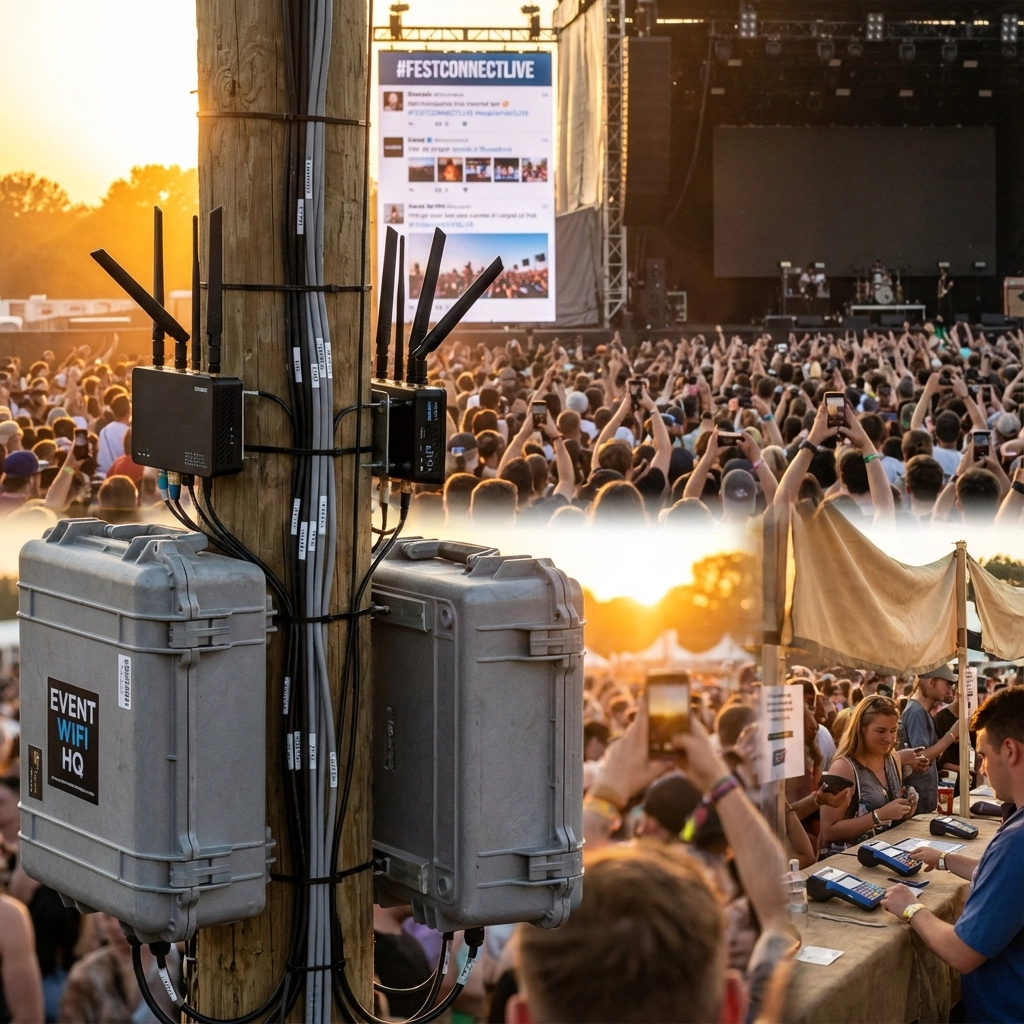
Professional event WiFi providers build redundancy into everything. Multiple internet connections, backup systems, failover protocols. If one connection goes down, another automatically takes over. Your payment systems keep running, your revenue keeps flowing.
Proper Network Design
We design networks specifically for the demands of live events. That means understanding peak usage patterns, device density, bandwidth requirements for payment processing, and how to prioritise critical traffic (like your card readers) over non-essential usage.
Real-Time Monitoring and Support
When something goes wrong at 2pm on a Saturday (and something always goes wrong), you've got professional technicians monitoring the network and fixing issues before they impact your revenue. No more crossed fingers and hoping for the best.
The Peace of Mind Factor
At the end of the day, running an event is stressful enough without worrying about whether your WiFi will hold up when it matters most. Professional event connectivity gives you one less thing to worry about, so you can focus on what you do best – creating amazing experiences for your attendees.
The cost of professional event WiFi is a fraction of what you'll lose if your payment systems fail. We've seen too many talented event organisers learn this lesson the expensive way.
Don't let a WiFi disaster be the thing that kills your event. The technology exists to keep your payment systems running smoothly, no matter how many people show up or how much they want to spend. You just need to work with people who understand how to deploy it properly.
Your festival deserves better than crossed fingers and consumer-grade routers. Your revenue streams deserve better. Your reputation definitely deserves better.
If you're planning an event and want to make sure your payment systems will actually work when you need them most, let's have a chat. Because the only thing worse than paying for professional WiFi is not paying for it and watching your event's profitability disappear into the digital ether.
Comments