Why Starlink Satellites Alone Won't Run Your Event WiFi (And What You Really Need)
Starlink has revolutionized internet access in remote locations, making it tempting for event organizers to think they've solved their connectivity challenges with a single satellite dish. The reality is far more complex. While Starlink provides excellent baseline internet access, running successful event WiFi requires a sophisticated infrastructure that goes well beyond satellite connectivity.
The Shared Bandwidth Reality
The fundamental challenge with Starlink at events isn't the technology itself: it's how bandwidth gets distributed when everyone wants to use it simultaneously. Starlink operates on shared bandwidth, meaning the total capacity available in any area must be split among all active users.
Early Starlink users enjoyed download speeds exceeding 200 Mbps, but as adoption has grown, average speeds have settled around 80-120 Mbps. This isn't a system failure; it's the inevitable result of more people sharing the same satellite capacity. At a busy event, this shared bandwidth problem becomes exponentially worse.
When multiple vendors, organizers, and attendees all deploy their own Starlink systems across a venue, they unknowingly create network chaos. Research from large events has documented over 1,800 competing WiFi networks operating simultaneously across a single site. The critical issue? All these Starlink systems default to identical WiFi channels, creating massive interference that degrades everyone's performance.
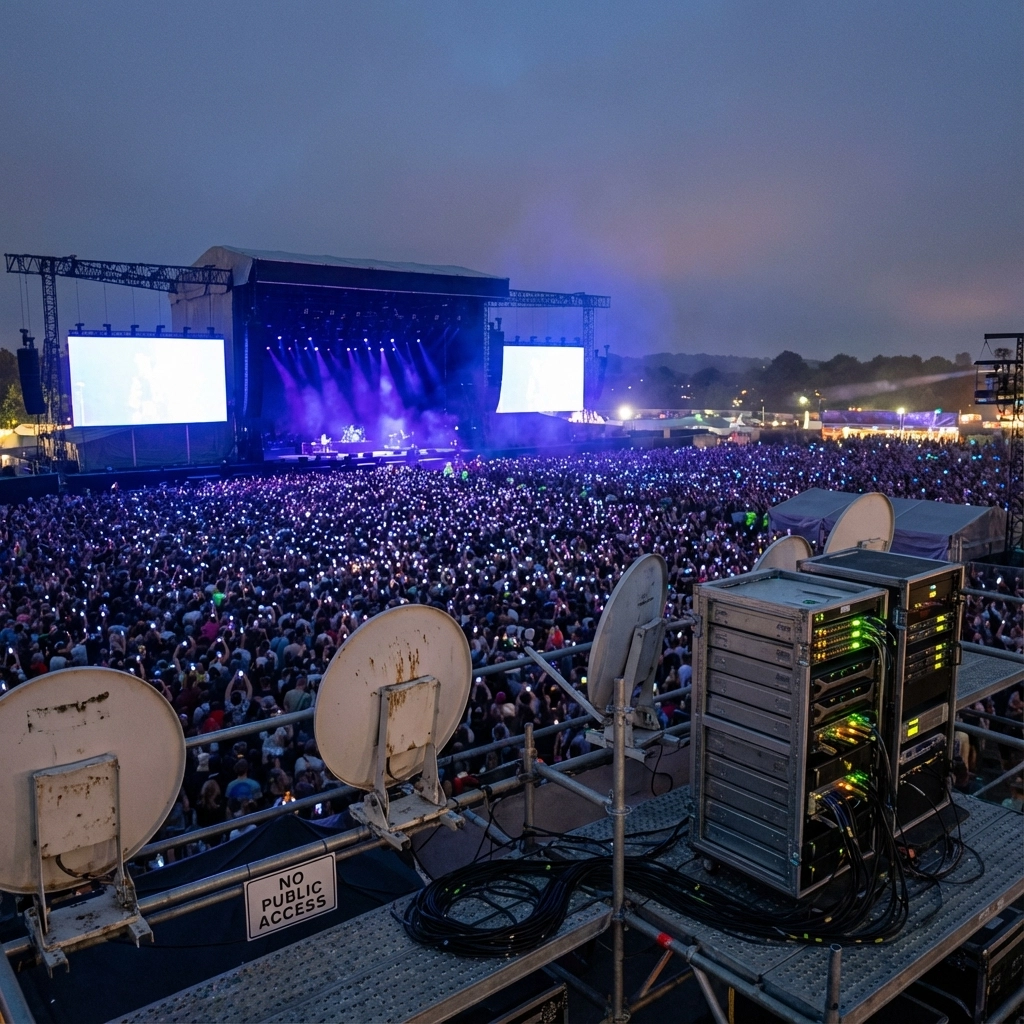
Technical Limitations That Kill Event Connectivity
Beyond bandwidth sharing, Starlink faces several technical constraints that make it unreliable as a standalone event solution:
Satellite Handoff Interruptions: Starlink antennas continuously switch between satellites as they move across the sky. These brief transitions cause data dropouts that might go unnoticed during casual web browsing but can catastrophically interrupt live streaming, payment processing, and real-time applications that modern events depend on.
Weather Vulnerabilities: Heavy rain, snow, or storm clouds can temporarily block satellite signals, potentially leaving your event disconnected during critical moments. While these interruptions are usually brief, they can happen at the worst possible times.
System Throttling: Starlink's anti-abuse measures detect when multiple systems operate in close proximity and throttle bandwidth accordingly. The system also dramatically reduces upload speeds when connected to larger networks, making it nearly impossible to support live streaming or cloud-based event management tools effectively.
What Professional Event WiFi Actually Requires
Successful event connectivity demands a comprehensive approach that addresses not just internet access, but how that access gets distributed, secured, and managed across your venue.
Professional-Grade Access Points
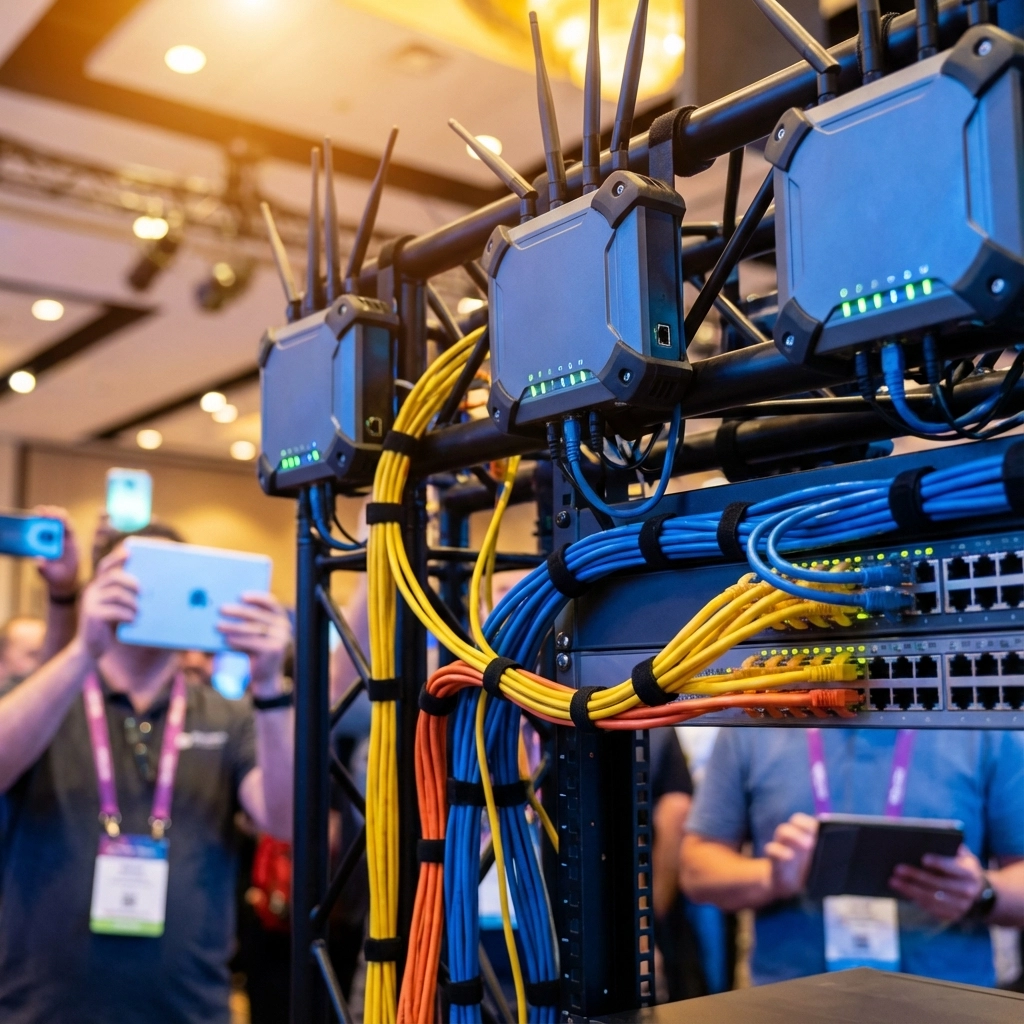
A single Starlink router cannot provide reliable coverage across a festival ground, conference center, or outdoor venue. You need strategically positioned, enterprise-grade wireless access points that can handle hundreds of simultaneous connections without degrading performance. These access points must be configured to work together as a unified network, automatically managing load balancing and seamless handoffs as attendees move around your venue.
Intelligent Channel Management
Professional WiFi deployment requires scanning the radio frequency environment and intelligently selecting the least congested channels. When everyone uses default Starlink WiFi settings, they all compete on the same channels. Proper network design spreads traffic across available spectrum and actively manages interference from competing networks.
Network Security Architecture
Event WiFi isn't just about providing internet access: it's about protecting your attendees, vendors, and event operations from security threats. This requires:
Guest network isolation to prevent devices from accessing each other
Traffic filtering to block malicious websites and content
Bandwidth controls to prevent any single user from consuming excessive capacity
Monitoring systems to detect and respond to security threats in real-time
Custom Landing Pages and Access Control
Professional event WiFi includes branded landing pages that capture attendee information, display event announcements, and provide terms of service. These systems can integrate with ticketing platforms, sponsor promotions, and event apps while ensuring only authorized users access your network.
Connection Bonding and Redundancy
The most reliable event connectivity combines multiple internet sources. Professional installations bond Starlink with cellular networks, fiber connections when available, and other connectivity options. When properly configured, this approach can achieve 160+ Mbps by aggregating multiple connections while providing automatic failover if any single connection experiences problems.
Traffic gets intelligently routed based on current conditions: critical applications like payment processing get priority paths while social media and entertainment traffic uses whatever bandwidth remains available.
Why DIY Approaches Fail
Many event organizers attempt to save money by purchasing consumer Starlink equipment and setting up basic WiFi themselves. This approach consistently fails because:
No load balancing: Consumer equipment can't intelligently distribute hundreds of simultaneous connections
No redundancy: When Starlink experiences a satellite handoff or weather interruption, the entire event loses connectivity
Security vulnerabilities: Basic routers lack enterprise security features needed to protect attendee data and prevent network abuse
No traffic prioritization: All applications compete equally for bandwidth, allowing non-essential traffic to disrupt critical event operations
The Professional Solution
Successful event connectivity requires partnering with specialists who understand both satellite technology and enterprise networking. At Commsuk, we deploy complete connectivity solutions that use Starlink as one component of a robust, redundant network designed specifically for events.
Our approach includes:
Pre-configured satellite systems with enterprise-grade WiFi infrastructure
Managed access points positioned for optimal coverage across your venue
Integrated security systems protecting both your network and attendee data
Traffic management ensuring critical applications maintain priority
24/7 monitoring with immediate response to any connectivity issues
Redundant connections bonding satellite, cellular, and fiber where available
This comprehensive approach ensures your event maintains reliable connectivity even when individual components experience problems.
When Starlink Shines (As Part of the Solution)
Starlink remains incredibly valuable for events, particularly in remote locations where cellular and fiber infrastructure is limited. When properly integrated into a professional network architecture, Starlink provides:
Rapid deployment in locations where traditional connectivity would take weeks to install
High-capacity backbone supporting multiple vendor operations simultaneously
Geographic flexibility enabling events in previously impossible locations
Cost-effective capacity compared to temporary fiber installations
The key is understanding that Starlink provides internet access: but transforming that access into reliable event WiFi requires professional network infrastructure, security systems, and ongoing management.
Modern events depend on connectivity for everything from payment processing to social media engagement. Attendees expect WiFi that works seamlessly, vendors need reliable internet for their operations, and organizers require connectivity for live streaming, communications, and event management systems. Meeting these expectations requires more than satellites: it requires comprehensive connectivity expertise.
When planning your next event, remember that great WiFi is invisible to users. They simply expect it to work. Achieving that level of reliability requires the right combination of technology, expertise, and ongoing support that only professional connectivity providers can deliver.
Comments