Field-Proven: Getting Rock-Solid WiFi to Remote Agricultural Shows
Agricultural shows have a special kind of pressure that indoor events just don't face. You're miles from the nearest town, surrounded by fields, and yet everyone: from ticket scanners at the gate to vendors selling everything from tractor parts to artisan cheese: needs reliable internet. And when we say reliable, we don't mean "fingers crossed the 4G holds up." We mean rock-solid connectivity that works all day, every day of the show.
The stakes are high. A dropped connection at the entry gate means long queues and frustrated attendees. A payment terminal that won't connect means lost sales for vendors who've travelled hours to be there. When you're hosting thousands of people in the middle of nowhere, internet isn't a nice-to-have. It's mission-critical.
Why Remote Sites Are the Hardest to Connect
Let's be honest: putting WiFi in a conference centre is relatively straightforward. There's power, there's infrastructure, and there's usually at least some baseline connectivity nearby. Agricultural shows? Not so much.
You're often working with open fields that have patchy mobile coverage at best and zero fixed-line options. The nearest cell tower might be several miles away, and when a few thousand people show up all trying to use 4G at once, that signal gets overwhelmed fast. Relying on mobile data alone is a gamble you don't want to take when entry systems, cashless payments, and even livestock registration depend on staying online.
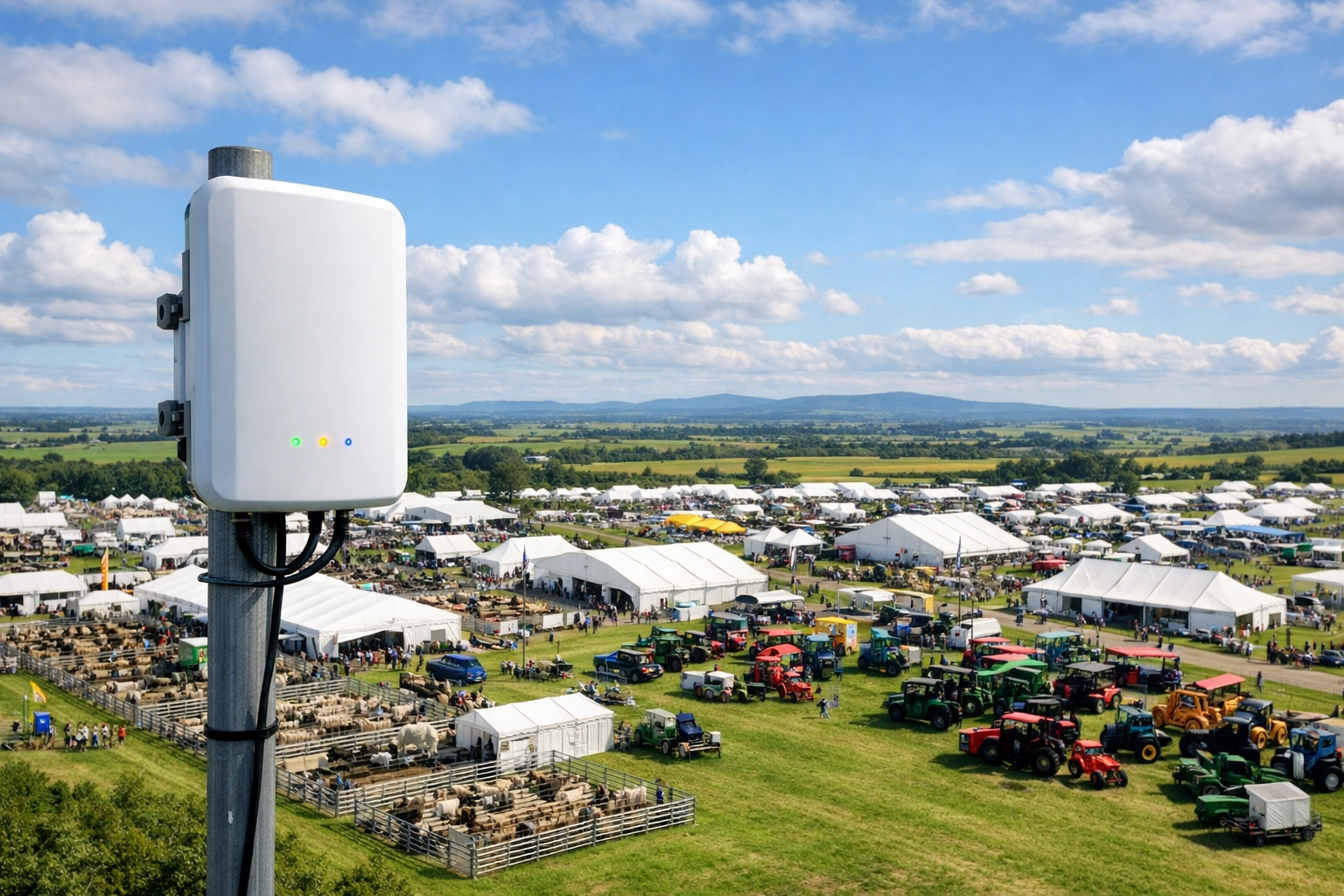
Then there's the sheer scale. These aren't compact indoor spaces: they're sprawling outdoor venues with livestock pens at one end, machinery demonstrations in the middle, and food vendors scattered throughout. Blanketing that much ground with consistent, strong WiFi takes more than just plugging in a router and hoping for the best.
What Actually Needs to Work
Before we dive into the solution, it's worth breaking down what actually depends on connectivity at a typical agricultural show:
Entry and ticketing systems need to scan codes, verify bookings, and process last-minute sales without delay. Queues build fast when gates can't process people efficiently.
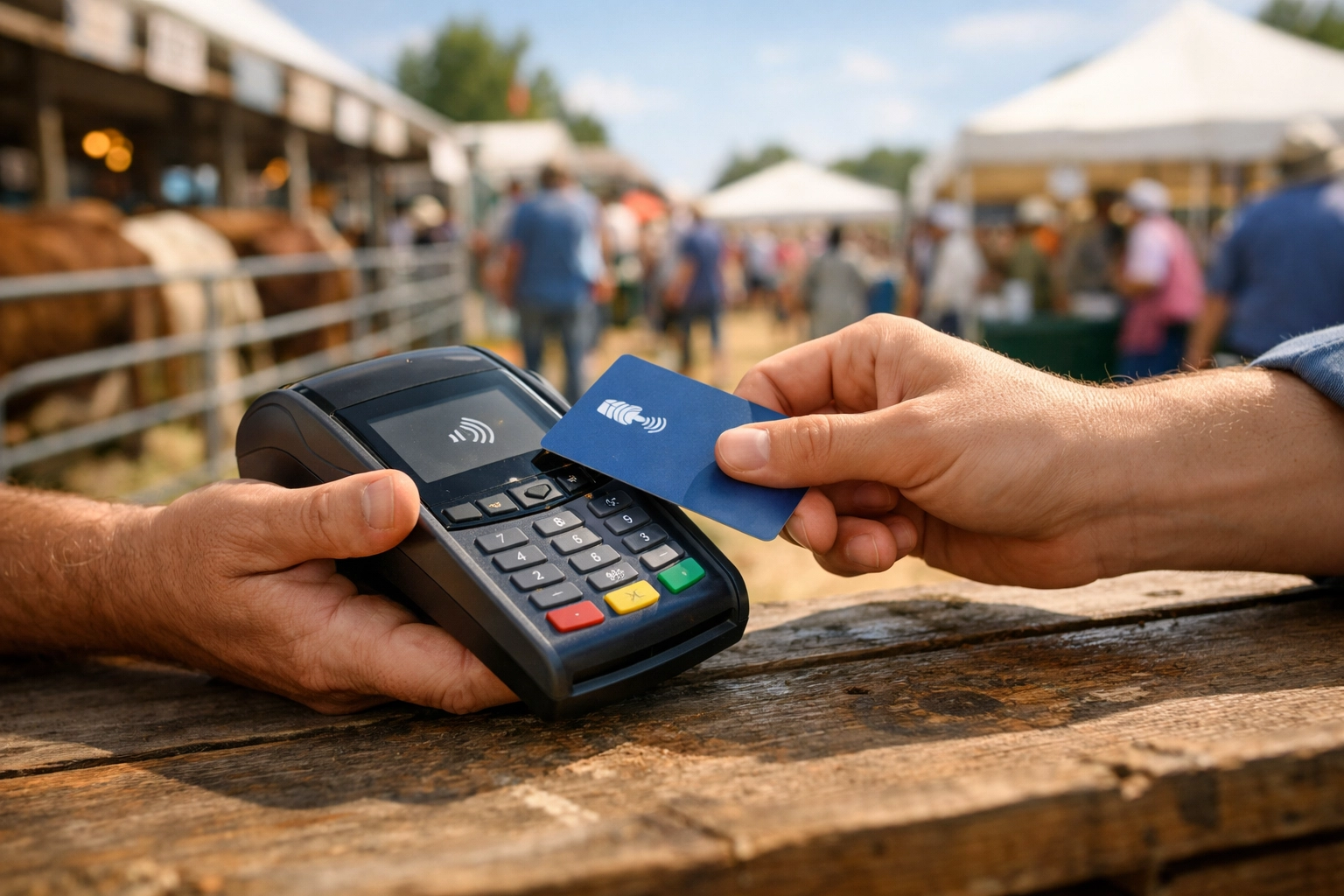
Vendor payment terminals are non-negotiable. Cash is declining everywhere, and rural events are no exception. If card machines aren't working, vendors lose sales and visitors get frustrated.
Event management systems track attendance, manage schedules, coordinate logistics, and often integrate with various exhibitor platforms. These backend systems need stable connections to keep everything running smoothly.
Exhibitor connectivity matters too. Modern agricultural tech companies want to demonstrate internet-connected equipment. Livestock registration often happens digitally now. Everyone expects at least basic WiFi access.
Media and live streaming are increasingly common, whether it's showcasing prize-winning animals or broadcasting demonstrations to wider audiences.
When any one of these fails, the whole event feels amateurish. When all of them work seamlessly, nobody even thinks about the WiFi: which is exactly the point.
How We Actually Solve This
At Commsuk, we don't show up with a one-size-fits-all solution. Remote agricultural shows need custom approaches based on location, scale, and specific requirements. That said, there are proven technologies that consistently deliver results in these challenging environments.
Satellite connectivity has become a game-changer for truly remote venues. Systems like Starlink provide high-speed internet literally anywhere with a clear view of the sky. No cell towers required, no fixed lines needed. This gives us a solid primary connection or an extremely reliable backup when some mobile coverage exists but can't be trusted under load.
Bonded 4G/5G networks work by combining multiple cellular connections from different providers. If one signal drops or weakens, the others keep things running. This redundancy is crucial when dealing with unpredictable rural coverage.
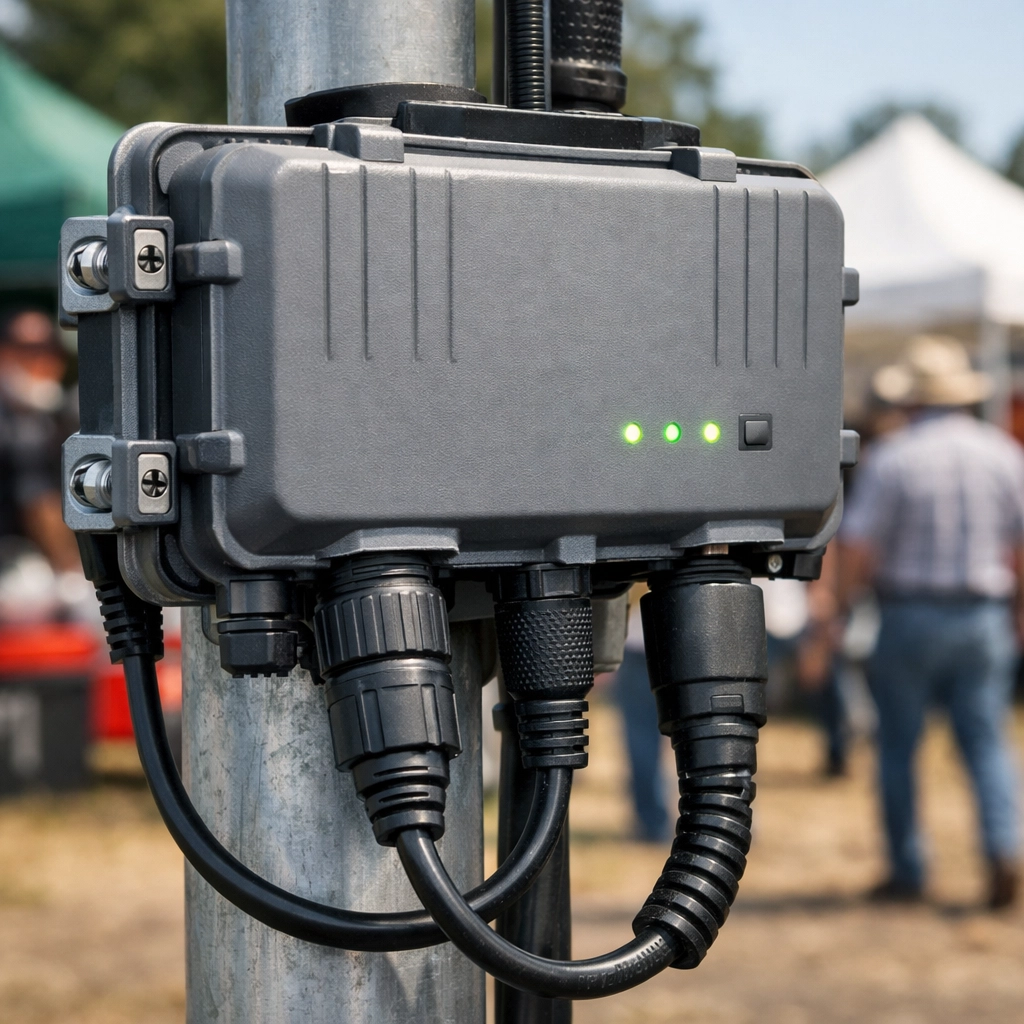
Long-range wireless bridging extends connectivity from wherever the nearest reliable connection point exists. If there's decent internet a few miles away, we can beam it to your event site using specialised equipment designed for exactly this purpose.
The key isn't just choosing one technology: it's intelligently combining them based on what each specific site needs. Some shows work perfectly with satellite as primary and bonded cellular as backup. Others need a different mix. That's where proper site surveys come in.
The Site Survey: Why It Matters
We always start with a thorough site survey, and this isn't just a box-ticking exercise. Our engineers visit the actual venue, map out the layout, test existing cellular signals from multiple providers, identify power sources, and plan equipment placement to ensure complete coverage.
This matters because what looks fine on paper often tells a different story in the field. That "minor dip" in the landscape? It can block wireless signals entirely. The "decent" 4G coverage mentioned by the venue? Might only hold up with five devices, not five hundred. The building that seems perfect for mounting access points? Could need completely different equipment depending on its construction.
A proper survey catches these issues before event day, when there's still time to adjust the plan rather than scramble with temporary fixes.
Equipment That Can Handle the Environment
Agricultural shows aren't gentle on equipment. There's dust, potential rain, temperature swings, and the occasional curious livestock. Everything we deploy is built for outdoor use: weatherproof enclosures, ruggedised access points, and backup power systems that keep running regardless of conditions.
Coverage planning is equally important. We don't just scatter access points randomly and hope for the best. Each one is strategically positioned to ensure overlap, eliminating dead zones even as crowds move around. High-traffic areas like entry gates and food courts get extra capacity. Vendor rows receive focused coverage to support payment systems. Admin areas where organisers work get prioritised bandwidth.
The scale varies based on the event. Smaller shows might need a portable kit that covers a few acres. Large multi-day exhibitions require complete infrastructure buildouts with dozens of access points, multiple connectivity sources, and dedicated on-site engineers monitoring everything in real-time.
Managing Network Priority
Here's something that doesn't always get talked about: not all internet traffic is equal during an event. A vendor processing a £500 machinery part payment needs guaranteed connectivity. Someone posting to Instagram can wait a few seconds if bandwidth is tight.
Our network management tools prioritise critical systems: ticketing, payments, registration: so they always have the bandwidth they need. Guest WiFi gets the remaining capacity, which is still plenty for casual browsing and social media under normal loads. If things get busy, the important stuff continues working smoothly while guest services might slow slightly rather than everything grinding to a halt.
This kind of intelligent traffic management is the difference between a network that performs well under pressure and one that collapses when everyone tries to use it at once.
What Actually Happens on Event Day
Setup starts well before gates open. Our team arrives early to install, configure, and thoroughly test everything. We verify that every critical system: ticket scanners, payment terminals, registration kiosks: connects and functions properly. Backup systems get tested to ensure they kick in automatically if needed.
Once the event is running, we don't just disappear. Engineers remain on-site throughout, monitoring network performance, adjusting coverage as needed, and immediately addressing any issues that arise. This hands-on presence means problems get solved in minutes, not hours.
Most organisers tell us they forget we're even there: the connectivity just works quietly in the background. That's exactly what we're aiming for.
Why This Approach Works
Remote agricultural shows shouldn't have to compromise on connectivity. The technology exists to deliver conference-quality WiFi in the middle of fields miles from anywhere. What matters is using the right combination of solutions, planning thoroughly, and having experienced engineers who understand the unique challenges of outdoor rural events.
At Commsuk, we've deployed networks at agricultural shows across the UK, from small county events to major national exhibitions. We handle everything from the initial site survey through to final teardown, so organisers can focus on running a great show while we make sure the connectivity side runs perfectly.
Because at the end of the day, nobody should have to worry about whether the WiFi will hold up. They should just trust that it will: and know that we've got it covered.
If you're planning an agricultural show or outdoor festival and need connectivity you can actually depend on, get in touch. We'll talk through your specific requirements and design a solution that keeps everything running smoothly, no matter how remote your venue might be.
Comments