The 11th Hour WiFi Crisis: How We Saved a Festival Go-Live in Under 4 Hours
- Mobile tech
- Aug 6
- 5 min read
It’s 6:00 AM on a Friday morning. The gates of a boutique music and arts festival open to thousands of eager attendees in just four hours. The soundcheck is humming, food trucks are firing up their grills, and the box office is setting up its ticketing terminals.
There is just one tiny, heart-stopping problem: absolutely zero internet connection.
The local telecom provider’s leased line, promised weeks in advance, failed overnight during a routine node upgrade. Phones are dead. Contactless payment readers are flashing frustrated red lights. The festival director is staring down the barrel of a complete operational disaster.
If you’ve ever run an event, you know this specific brand of cold sweat. You spend months curating lineups, designing site maps, coordinating security, and managing permits: only for the invisible digital glue holding it all together to snap right before curtain call.
Here is the story of how our team at Commsuk Limited turned a potential nightmare into a seamless opening, and why last-minute connectivity doesn't have to mean panic.
When the Worst-Case Scenario Becomes Your Morning Alarm
When the panicked call hit our emergency dispatch line at 6:45 AM, our managing director didn't ask how it happened or whose fault it was. In an event crisis, finger-pointing wastes precious minutes.
The immediate reality was stark:
Ticketing & Box Office: Offline. Guests would pile up at the gates within hours, causing massive queues and safety bottlenecks.
Cashless POS: Dead. Vendors relying entirely on mobile card readers couldn't process a single pint, burger, or piece of merch.
Production & Security: Severed. Radios and coordination channels were scrambling without reliable backhaul.
In the fast-paced world of live events, traditional fibre installations take weeks or months of permits, trenching, and bureaucracy. But when you are four hours away from go-live, waiting for traditional infrastructure is a luxury you simply don't have. You need a rapid response squad equipped with portable technology and unwavering calm.
The 4-Hour Sprint: Deploying Satellite and Speed
Within fifteen minutes of the initial call, our on-call deployment engineers had a rapid-response vehicle packed with mobile satellite uplinks, pre-configured enterprise routers, and outdoor-rated mesh access points.
Here is how we pulled off the rescue mission before the first ticket was scanned at 10:00 AM:
1. Rapid Satellite Backhaul Setup (7:15 AM)
Because laying physical cables across a sprawling greenfield site was out of the question, we bypassed local landlines entirely. We deployed high-performance LEO satellite internet (similar to the technology we explore in our guide on why we use Starlink satellites for event WiFi). Within minutes of arriving on site, our engineer mounted the portable dish on a stable tripod, achieving an instant, high-speed connection with zero dependency on local telecom infrastructure.
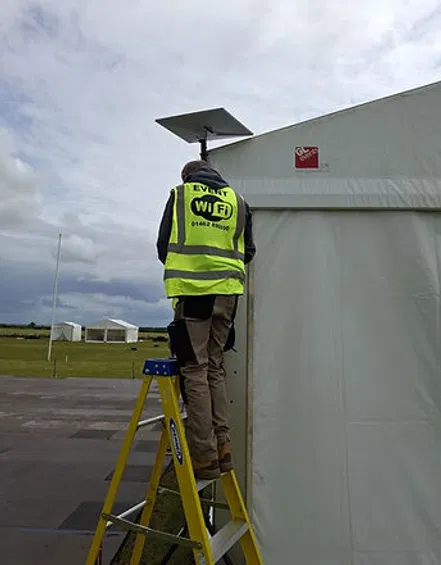
2. Creating Critical "Internet Islands" (8:00 AM)
Covering an entire festival ground instantly is a tall order, so we prioritized triage. We established high-priority "internet islands" focused strictly on the areas that mattered most for a successful morning:
The Main Entrance Gate: Ensuring ticket scanners and box office tablets stayed lightning-fast.
The Bar and Food Village: Guaranteeing contactless POS terminals could process transactions without lag.
Production Office: Giving event managers reliable comms and coordination tools.
By segmenting the network and utilizing pre-configured outdoor access points, we delivered robust coverage exactly where it was needed most, avoiding wasted bandwidth on non-essential traffic.
3. Traffic Shaping and Network Segmentation (8:45 AM)
When you're working with compressed backhaul under tight timeframes, bandwidth management is everything. We configured intelligent traffic shaping:
Dedicated, unthrottled bandwidth for vendors and ticketing systems so payment processing never dipped.
Controlled guest WiFi portals with sensible session timeouts.
Separate staff networks shielded from public congestion.
If you're curious about how we structure network redundancy and failover plans before disaster strikes, take a look at our breakdown on ensuring your event WiFi has a solid backup plan.
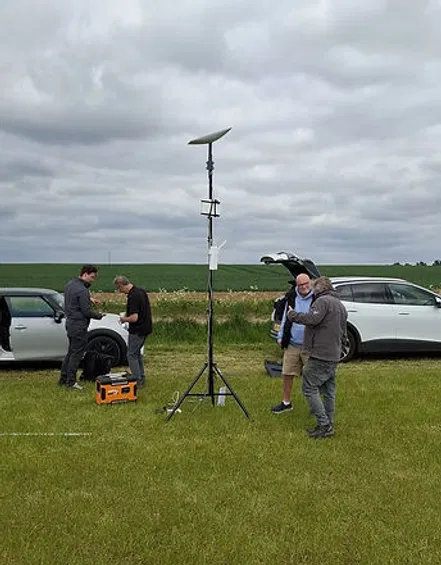
4. Final Testing and Stress-Checking (9:30 AM)
With thirty minutes to spare before the gates swung open, our engineer ran rigorous speed and ping tests across every terminal. The uplink was stable, latency was minimal, and every card reader flashed a reassuring green light.
When the first attendees walked through the gates at 10:00 AM, tickets scanned instantly, contactless payments zipped through without a hitch, and the festival organisers finally took their first deep breath of the day.
Why Last-Minute Doesn't Have to Mean Stressful
That morning serves as a testament to our core philosophy at Commsuk: temporary events should never mean permanent hassle.
Too many organisers assume that reliable internet requires months of planning and endless coordination with sluggish telecom monopolies. While advance planning is always ideal: and we love working with teams weeks ahead of time: unforeseen hiccups happen. Weather events, cut cables, supplier dropouts, and sudden site changes are all part of the live event landscape.
That is why our full-service support model is built from the ground up for speed, flexibility, and absolute peace of mind:
Ultra-Fast Setup: Whether it's a remote festival field, a pop-up market in the city centre, or an agricultural show in the middle of nowhere, our gear is engineered for rapid deployment.
End-to-End Management: You don't need to configure routers or troubleshoot interference. Our team handles site surveys, physical installation, live monitoring, and complete teardown.
Rock-Solid Reliability: No dead zones, no sudden dropouts, and built-in cellular or satellite redundancy so you never have to cross your fingers and hope for the best.
As we discuss in our deep dive on why temporary events thrive with pop-up WiFi, connectivity should adapt to your schedule: not the other way around.
Your Pre-Event Connectivity Checklist
If you are currently planning an upcoming festival, corporate gathering, or pop-up event and want to ensure you never have to experience an 11th-hour panic attack, keep these quick tips in mind:
Audit Your Backhaul: Never rely solely on a single local phone line or venue broadband connection. Always have a wireless or satellite backup plan.
Prioritise Critical Zones First: Map out your essential operations (ticketing, POS, safety) and ensure they have dedicated network slices before opening public Wi-Fi.
Partner With Specialists: Work with a team that specializes exclusively in event technology. Standard IT support technicians often lack experience with high-density outdoor deployments and rapid field changes.
Build in Testing Time: Even with rapid deployment capabilities, giving your technical partner a couple of hours pre-event for testing ensures absolute perfection when gates open.
Don't Let Bad Connection Ruin Your Event
Going offline isn't just an inconvenience: it hurts your revenue, frustrates your attendees, and stresses out your entire production team.
Whether you are planning months in advance or find yourself facing an unexpected connectivity crisis right before showtime, Commsuk Limited is here to help. We deliver instant, reliable WiFi and satellite internet solutions tailored to events of every size, anywhere in the country.
Ready to secure rock-solid internet for your next event? Get in touch with our team today and let us handle the tech while you focus on creating an unforgettable experience.
Comments