Staff WiFi: The Invisible Network That Keeps Your Event Running
Most people think of event WiFi as the network guests use to check the schedule, share a photo or scan a QR code.
That is only one part of the picture.
Behind the scenes, your event is relying on a separate layer of connectivity for ticketing teams, production crews, payment terminals, organisers, contractors and site managers. It may not be visible to attendees, but it is often the network doing the most important work.
That is where staff WiFi and production WiFi come in.
When these networks are treated as an afterthought, small problems can quickly become operational ones. A check-in team cannot sync tickets. A cashless payment terminal stops responding. A production manager cannot access the running order. A digital comms channel falls silent at the exact moment the crew needs it.
Reliable event connectivity is not just about giving guests internet access. It is about keeping the people running the event connected to the systems, information and teams they depend on.
What is staff WiFi?
Staff WiFi is the working network for the people operating your event.
It can support:
Registration and ticketing teams
Event managers and floor staff
Exhibitor and vendor support
Digital check-in devices
Staff messaging and collaboration tools
Site management and logistics
Organiser laptops and tablets
Operational dashboards and cloud-based systems
This network needs to be practical and dependable. Staff should be able to move around the site while staying connected to the tools they use throughout the day.
It also needs to be designed for real event conditions. Staff WiFi is not just for a handful of laptops in an office. It may need to support mobile devices moving between gates, marquees, production areas, service roads and temporary structures.
The goal is simple: the people responsible for making the event work should not be fighting with the internet while they are doing their jobs.
What is production WiFi?
Production WiFi is the network that supports the technical and operational machinery of an event.
It may be used by:
Show control systems
AV and lighting teams
Streaming and broadcast crews
Stage managers
Payment and point-of-sale systems
Ticketing and access control
Badge printing and registration
Event management platforms
Digital signage
On-site contractors and technical suppliers
Production WiFi is often more sensitive to disruption than ordinary staff browsing. If someone cannot load a document immediately, the problem may be inconvenient. If a production system cannot communicate with the equipment or platform it needs, the effect can be much bigger.
That is why production traffic should be treated as a priority within your event connectivity setup.
It should not have to compete on equal terms with casual browsing, video streaming or large file downloads from general staff devices.
The crew network supports more than people realise
A successful event involves a long chain of connected tasks.
At the entrance, staff need to check tickets and confirm attendance. Across the site, vendors may be processing cashless payments. In the control area, production teams may be coordinating schedules, screens, lighting and audio. Managers may be sharing updates across messaging platforms. Organisers may be monitoring attendance, sales or operational issues in real time.
These systems are separate, but they are often connected by the same underlying event connectivity.
This is why staff WiFi should be planned around workflows rather than simply user numbers.
The useful question is not only:
How many people will use the WiFi?
It is also:
What will the event team need to do online, and which of those tasks cannot afford to pause?
A production crew may need a stable connection for technical systems, while a registration team needs fast and consistent access to ticketing tools. A site manager may need to communicate with several teams at once. Each group may have different requirements, even when they are working at the same event.
Ticketing and access control need their own priority
Ticketing is one of the clearest examples of why staff WiFi matters.
When an event opens, the registration and access teams are usually working under pressure. They need to scan tickets, look up records, issue credentials and resolve problems quickly. A slow or unreliable connection creates queues and puts extra pressure on staff.
The answer is not always simply “more bandwidth”. The network also needs to be organised so that essential ticketing traffic is given the right priority.
Where possible, critical registration equipment should use the most dependable connection available. Wired connections can be appropriate for fixed equipment, while mobile teams may need a dedicated staff WiFi network. Ticketing providers should also be asked how their systems behave if connectivity is interrupted, including whether they offer offline functionality or local data caching.
That conversation should happen before the event, not while a queue is forming at the entrance.
Cashless payments depend on steady production WiFi
For traders, exhibitors and food vendors, connectivity is closely tied to revenue.
A payment terminal that takes too long to respond can lead to abandoned purchases, duplicated attempts or frustrated customers. At a busy event, even short interruptions can affect a large number of transactions.
Cashless payment systems should be treated as part of the production environment. They need a reliable connection, suitable coverage and a clear fallback process.
That might include:
Dedicated production WiFi for payment devices
Wired connections for fixed payment points where practical
Battery and power planning for mobile terminals
Confirmation of offline payment options
A simple process for reporting and resolving connection issues
The important point is that payment devices should not be left to compete with every other device on a general-purpose network.
Staff communications need dependable access
Events are run by people making decisions quickly.
Staff may use radios, phones, messaging platforms, scheduling tools or event management apps to share information. Radio remains important for many event teams, particularly for security, logistics, stage management and site operations. But the wider communications setup may still depend on network connectivity.
Examples include:
Radio dispatch or gateway systems
Push-to-talk applications
Crew messaging groups
Cloud-based incident logs
Shared run sheets
Live operational dashboards
Voice and video calls between remote teams
If the crew cannot communicate, small issues can take longer to resolve. A delivery is delayed. A supplier is waiting in the wrong place. A schedule change does not reach the right team. An operational decision is made without the latest information.
Staff WiFi does not replace good event management. It gives the team the dependable connection needed to put that management into practice.
Keep staff WiFi and production WiFi distinct
Staff WiFi and production WiFi serve different purposes.
Staff WiFi is usually designed for people and their everyday operational tools. Production WiFi is designed for priority systems and technical workflows. Keeping them distinct makes it easier to manage capacity and protect the performance of critical applications.
This does not need to become complicated for the event team. Staff should receive clear instructions about which network to use, and technical suppliers should know where their equipment belongs.
A sensible setup may include:
A dedicated production network for critical event systems
A staff WiFi network for organisers and operational teams
A separate network for exhibitors or contractors, where required
Appropriate wired connections for fixed, high-priority equipment
Clear device and network labelling during setup
Monitoring throughout the event
The exact design depends on the venue, site layout, event size and systems involved. A small corporate event may need a straightforward setup. A festival or agricultural show may need several connected areas, multiple suppliers and a much larger production footprint.
The principle remains the same: give important event systems the connectivity they need instead of treating every device as equal.
Build reliability into the connection
A crew network should not rely on one fragile point of failure.
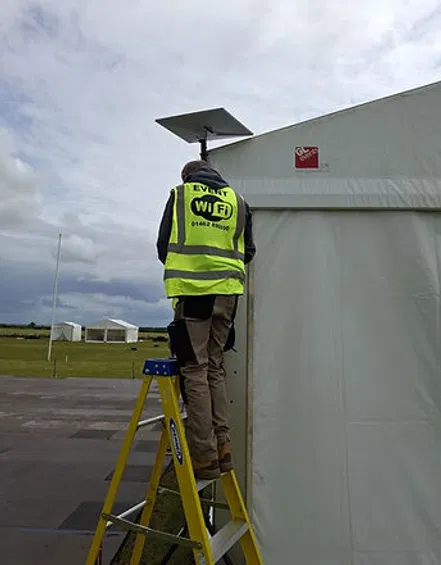
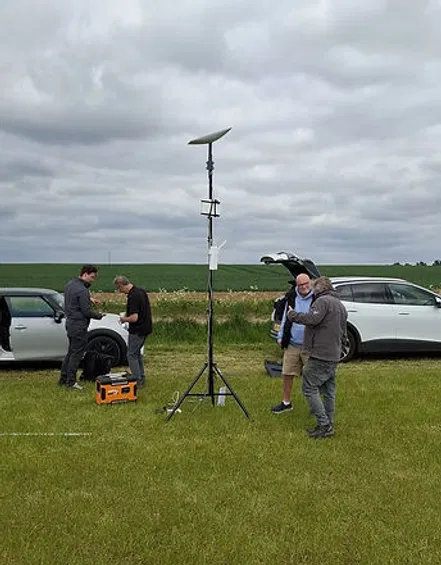
Professional event connectivity may combine satellite internet, local network equipment, wired links and backup options to create a more resilient service. The right approach depends on the location and the applications being used, but the aim is always to keep essential operations moving.
At Commsuk, our event WiFi service is managed from installation through to on-site support and teardown. That can include site surveys, satellite internet, network deployment, monitoring and practical support for events across the UK and Europe.
For remote or temporary venues, satellite connectivity can provide a fast route to a dependable internet connection without relying entirely on existing venue infrastructure. Our guide to using Starlink for event WiFi explains why rapid deployment and location flexibility can be useful for live events.
Give the crew network a clear owner
One of the simplest improvements an organiser can make is to decide who owns staff and production connectivity on the day.
That person or team should know:
Which systems are considered critical
Which devices use staff WiFi
Which devices use production WiFi
How to report a problem
What backup options are available
Who can make technical decisions during the event
This avoids the common situation where a payment provider blames the venue, the venue blames the WiFi supplier and the event team is left trying to work out what has happened.
A managed connectivity partner can take responsibility for monitoring and troubleshooting, giving the event team one less technical issue to chase.
The network guests never see
Guest WiFi is visible because attendees interact with it directly. Staff WiFi and production WiFi are different. They work quietly in the background, supporting the people and systems that keep the event moving.
When staff can check tickets, take payments, communicate with colleagues and access production tools without interruption, the network is doing its job properly.
That is the real value of reliable event connectivity. It gives the crew confidence to focus on the event itself rather than wondering whether the next scan, payment or message will go through.
If your event depends on ticketing, cashless payments, production systems or staff communications, the behind-the-scenes network deserves its own plan. To discuss a managed setup for your next event, contact Commsuk.
Comments