The Real Cost of Event WiFi: What Drives the Price and What Cutting Corners Costs You
When organisers compare event WiFi quotes, the prices can sometimes appear difficult to reconcile. One provider may quote a few hundred pounds, while another recommends a much larger investment for what sounds like the same requirement.
Usually, the difference is not simply a higher margin. It comes down to what the quote includes, how the network has been designed and how much risk the provider is prepared to manage.
Temporary event WiFi is not just a router and a password. It can involve site planning, dedicated bandwidth, satellite or mobile backhaul, access points, cabling, power, engineers, live monitoring, failover and complete removal after the event.
The important question is not “What is the cheapest WiFi quote?” It is:
“What level of connectivity do we need, and what will it cost if that connectivity fails?”
What actually drives the cost of event WiFi?
Every event network is different. A small indoor gathering with a few card machines has very different requirements from a multi-day festival with ticketing, production teams, exhibitors, live streaming and thousands of guests.
These are the main factors behind the price.
1. Site survey and network design
A reliable temporary network starts before any equipment arrives on site.
A provider needs to understand:
The size and layout of the event site
Indoor and outdoor areas requiring coverage
The number of expected users and connected devices
High-density zones such as entrances, stages and exhibition areas
Where payment terminals, ticketing systems and production equipment will operate
Available power, access routes and safe cable runs
Whether existing venue infrastructure can be used
The most suitable position for antennas, dishes and network equipment
This planning work may appear as a separate line on a quote, or it may be included within a managed package. Either way, it has real value.
Without a proper assessment, a provider can easily underestimate the number of access points, choose the wrong backhaul or overlook a difficult part of the site. The result may be a cheaper quote that becomes expensive when problems appear during installation.
2. Bandwidth and what people will use it for
The number of attendees matters, but their activity matters just as much.
A network supporting basic registration and a few card machines needs less capacity than one carrying:
Multiple ticket scanning points
Contactless and card payments
Exhibitor systems
Staff communications
Cloud-based event management platforms
Social media uploads
Video calls and live streaming
Guest browsing across a large site
It is also important to distinguish between advertised speed and usable capacity. A quote may mention a headline download speed without explaining whether that capacity is dedicated to your event, shared with other users or subject to data limits.
A professional provider should ask how the connection will be used and recommend capacity accordingly. Buying too little bandwidth can lead to poor performance at precisely the point when the event is busiest. Buying far more than you need, however, can unnecessarily inflate the budget.
3. The number and density of access points
Coverage and capacity are not the same thing.
One access point may provide a signal across a large area, but it will not necessarily perform well if hundreds of devices are trying to use it at the same time. High-density locations need additional access points so that demand is distributed properly.
The required number depends on:
The physical footprint
Walls, buildings and other obstructions
The construction materials used on site
Expected device numbers
User density in particular areas
Whether separate networks are needed for guests, staff, production or payments
An outdoor festival may require weather-protected equipment, long cable runs and multiple distribution points. An exhibition may need carefully positioned access points in each hall or around individual stands.
This is why two providers can look at the same venue and recommend very different hardware quantities. One may be pricing for basic coverage. The other may be designing for consistent performance under peak demand.

4. Backhaul: fibre, satellite or 4G/5G bonding
Backhaul is the connection carrying traffic from your temporary network to the wider internet. The right option depends on the location, lead time, reliability requirements and available infrastructure.
Fibre
Fibre can be a strong choice where it is already available, properly provisioned and supplied at a reasonable cost. However, venue internet may be shared, restricted or subject to significant event-specific charges.
It is worth asking whether the quoted service is genuinely dedicated, what service levels apply and who is responsible if the venue connection fails.
Satellite
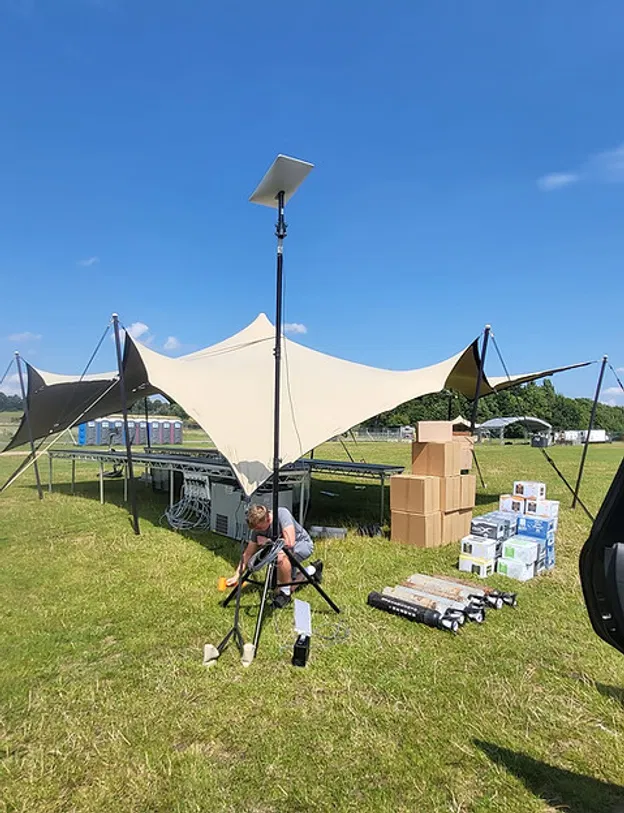
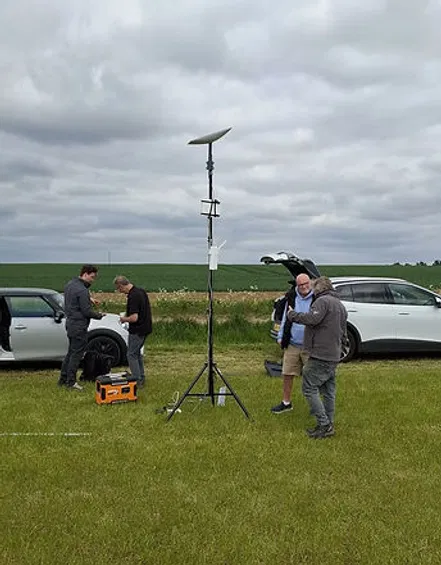
Satellite internet is particularly useful for rural sites, fields, temporary venues and locations where fibre installation is impractical or too slow.
It can provide rapid deployment without waiting for new physical lines to be installed. Commsuk explains more about the role of satellite connectivity in our guide to using Starlink for event WiFi.
Satellite equipment and service capacity form part of the cost, but the overall solution may still be more practical than arranging temporary fibre in a difficult location.
4G and 5G bonding
Mobile connectivity can be useful as a primary connection, a secondary route or part of a bonded solution. Bonding combines multiple mobile connections to improve capacity and resilience.
Its performance depends on local coverage, network congestion and the number of carriers being used. A mobile signal that performs well during an empty site build may behave very differently once the event is full.
The right quote should explain whether mobile connectivity is being used alone, alongside another backhaul or as part of an automatic failover design.
5. Redundancy and resilience
Redundancy costs more because it requires additional equipment, connectivity and configuration. It is also one of the areas where cutting costs can create disproportionate risk.
A resilient event network may include:
A secondary internet connection
Different types of backhaul
Automatic failover
Spare network hardware
Duplicate critical components
Backup power arrangements
Remote monitoring and alerts
Not every service needs the same level of protection. Guest browsing may tolerate a brief interruption. Payment processing, access control and production communications may not.
The sensible approach is to identify which systems are business-critical and protect those first, rather than adding expensive redundancy everywhere.
6. Engineers, monitoring and teardown
A temporary network requires people as well as equipment.
The quote may include:
Pre-event preparation and configuration
Delivery and equipment handling
Installation and cable management
Testing before the event opens
On-site technical support
Remote monitoring
Troubleshooting during peak periods
Equipment collection and teardown
The duration of support matters. A provider monitoring the network throughout a three-day festival is delivering something very different from one that installs a router and leaves.
Teardown should also be considered. Removing temporary infrastructure safely takes time, particularly across a large site or when equipment has been installed in multiple buildings, tents or production areas.
Commsuk manages event connectivity from installation through on-site support, including the equipment and practical work required to take the network away once the event is complete.
Why do event WiFi quotes vary so widely?
The word “WiFi” can describe very different services.
One quote may cover a single internet connection for a small team. Another may include a fully designed, site-wide network with separate access, production and payment networks, live monitoring and an engineer on site.
When comparing prices, check whether each provider has included:
The same event dates and build period
The same site footprint
The same expected user numbers
The same bandwidth requirement
The same number of access points
The same backhaul type
The same level of redundancy
The same support hours
Installation and dismantling
Delivery, power, cabling and equipment protection
VAT and any venue charges
Venue pricing can also create large differences. Some venues require organisers to purchase connectivity through their approved supplier, while others allow an independent event specialist to provide the network. External research from Wireless Solutions and Made by WiFi highlights how much temporary internet pricing can vary depending on scale and specification.
A low quote is not automatically wrong. It may simply be designed for a smaller requirement. The problem occurs when a basic service is sold as though it will support a high-stakes event.
The hidden cost of buying on price alone
A cheap network can become very expensive when it fails.
Potential consequences include:
Lost card payments
If payment terminals stop working during a busy period, traders may lose sales immediately. Some customers will not wait while a connection is restored, particularly at crowded festivals, markets and exhibitions.
Delayed ticketing and entry
Slow or unreliable connectivity at the entrance can create queues, frustrate visitors and delay the start of sessions or performances.
Staff firefighting
Instead of managing guests, suppliers and schedules, event staff may spend their time restarting routers, moving equipment and trying to find a signal.
Refunds and additional costs
Connectivity problems can lead to refunds, missed transactions, emergency equipment hire and last-minute technical support.
Reputational damage
Attendees may remember long queues, failed payments or poor service more clearly than the technical reason behind them. Exhibitors and sponsors may also question whether the event was professionally managed.
The cost of failure is not always visible in the WiFi budget. It can appear later in lost revenue, additional labour and reduced confidence in the event.
How to compare event WiFi quotes properly
Before accepting a quote, ask each supplier to confirm the following in writing:
A like-for-like comparison is more useful than comparing the final totals alone.
Where can you trim the budget?
There are sensible ways to reduce cost without taking unnecessary risks:
Separate critical systems from general guest access
Limit guest bandwidth where appropriate
Focus strong coverage on operationally important areas
Use existing fibre if its performance and service terms are verified
Avoid paying for full event-day support when remote monitoring is sufficient
Agree the exact build and teardown windows
Choose satellite where temporary fibre would be slow or disproportionately expensive
Scale the network to actual attendance rather than a much larger theoretical capacity
However, some areas should not be treated as optional:
Proper network design
Adequate access point density
Reliable backhaul
Protection for payments and event operations
Monitoring during critical periods
Safe installation and cable management
A clear response plan for faults
The goal is not to buy the biggest network. It is to buy the right level of reliability for the consequences your event would face if connectivity failed.
A managed package makes the cost easier to understand
The most useful event WiFi quote is one that explains both the technical solution and the responsibility for delivering it.
At Commsuk, we handle the process as one managed package: surveys, equipment, installation, monitoring and teardown. We provide connectivity for events ranging from small pop-ups to large outdoor gatherings, tailoring the solution to the site and the systems that need to stay online.
If you are planning an event and want to understand what your connectivity should cost, contact the Commsuk team. We can help you compare the practical requirements, identify where resilience matters most and create a network plan that gives you confidence without paying for capacity you do not need.
Comments