Food Festival WiFi: Why Your Traders' Card Machines and Your Guests' Photos Depend on It
A food festival can look wonderfully simple from the outside.
A field. A few rows of food traders. Music, picnic tables and happy guests moving between stalls.
Behind the scenes, though, there is a lot to keep running. Card machines need to process payments. Traders may rely on order apps. Staff need to stay in touch. Guests want to check the programme, share photos and find their friends.
All of this depends on one thing: reliable connectivity.
That is why event WiFi should be part of your planning from the start, not something added a few days before opening.
Food festivals rarely have ideal internet
Food festivals often take place in parks, fields, fairgrounds and rural venues.
These locations are part of the appeal. They give you space, atmosphere and room for large crowds. But they may have poor mobile signal, limited power and no suitable broadband connection.
Even when there is a mobile signal, it may not be enough.
Hundreds or thousands of people can arrive with phones, tablets and payment devices. Everyone is trying to connect at the same time. The local network may become slow or unreliable just when your event is busiest.
A signal that works well for a site visit may struggle badly when the gates open.

Card machines are now essential for food traders
Most guests expect to pay by card or phone. Many will arrive without cash, especially if your event is promoted as cashless.
That puts pressure on every food trader to have a working card reader.
When connectivity is poor, card payments can take longer to approve. A payment may fail completely. The trader may need to restart the reader, ask the customer to try again or send them to find cash.
That creates frustration on both sides of the counter.
It can also mean lost sales. People may decide not to buy if the queue is moving too slowly or their payment keeps failing.
Not every card machine works in the same way when the connection drops. Some payment systems have offline features, but they may still need to connect regularly to sync transactions or complete other tasks. Your traders should check the requirements of their own devices before the event.
As an organiser, you should also make sure the network is designed around payment points. A trader’s card reader should not be competing with guest video uploads for the same connection.
Queue flow depends on fast event connectivity
At a food festival, queues are part of the experience. They are not always a problem if they move steadily.
The trouble starts when people stop moving.
A slow payment terminal can hold up an entire counter. If several popular traders experience the same issue, queues spread into walkways and nearby seating areas. That can affect access, crowd movement and the overall feel of the festival.
Good event connectivity helps traders serve customers quickly and keeps queues flowing.
It is worth mapping out:
Every food and drink trading position
High-volume traders likely to need extra capacity
Card machines, tablets and order screens
Staff and production communication points
Ticketing or check-in areas
Any top-up or cashless payment stations
Areas where guests are likely to gather
This is a key part of venue WiFi planning. The aim is not simply to put WiFi everywhere. It is to make sure the right people and devices have a dependable connection in the places where it matters most.
Traders often need more than a card machine
Food traders may arrive with their own technology.
They might use:
Tablet-based ordering systems
Stock and inventory apps
Digital menus
Kitchen display screens
Online ordering platforms
Delivery or collection notifications
Accounting and sales software
Card readers connected to phones or tablets
If these systems rely on the internet, a poor connection can affect the whole operation.
A trader may have plenty of staff and ingredients ready to go, but still be unable to serve efficiently because the order app will not load.
This is why it helps to ask traders about their connectivity needs before the event. Find out what equipment they use and whether they need wired connections, dedicated WiFi or a particular location for their router.
You do not need to manage every trader’s technology yourself. But you do need an event connectivity plan that takes their equipment into account.
Your guests need WiFi too
Guests are not only using their phones to take photos.
They may need to:
Check the event programme
Find a particular trader
View menus and allergens
Read travel or parking updates
Message friends
Scan promotional QR codes
Book workshops or tasting sessions
Share photos and videos online
For many organisers, guest WiFi is also part of the marketing plan.
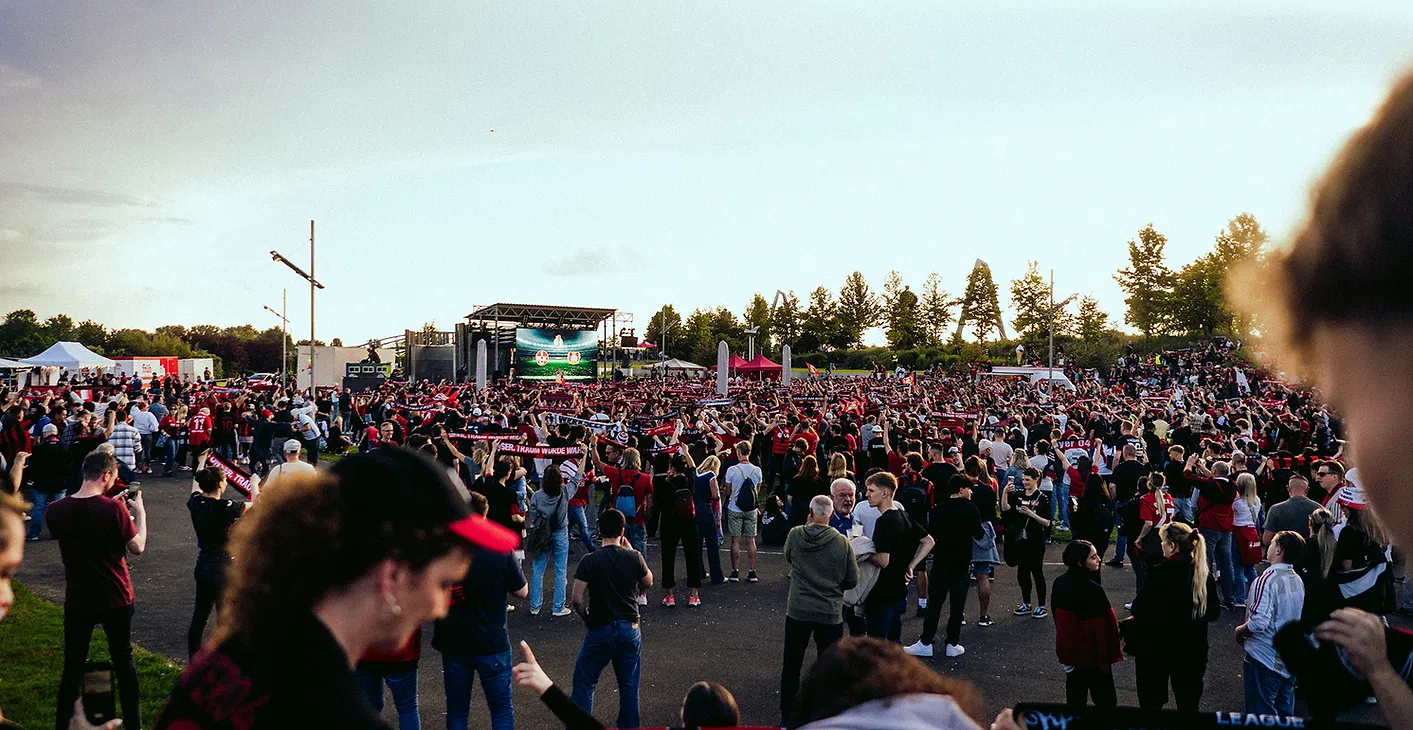
A guest who posts a photo of a great dish, a busy crowd or a live performance is helping promote your festival in real time. Their friends and followers see the atmosphere while the event is happening.
That kind of live sharing can encourage future ticket sales and help traders reach new customers.
But guests will not keep trying to upload content if the connection is slow or keeps dropping. They will simply switch back to mobile data, if the local network can handle it, or give up altogether.
Reliable WiFi makes it easier for people to take part in the event and share it with others.
Keep payment traffic separate from guest traffic
A good event WiFi setup should not treat every device in the same way.
Payment systems, ticketing and staff communications are critical. Guest browsing and social media are important too, but they should not be allowed to slow down the systems your event depends on.
Your connectivity provider should be able to create separate networks for different uses, such as:
Food trader payments and ordering
Ticketing and access control
Staff communications
Production and event management
Guest WiFi
Exhibitor or sponsor devices
This means a surge in video uploads is less likely to affect a card reader at a busy food stall.
It also helps your support team identify problems more quickly. If one service needs attention, they can investigate it without disrupting everything else.
Satellite WiFi works where traditional broadband cannot
For an outdoor food festival, satellite internet can provide a dependable connection without relying on local broadband or nearby mobile phone masts.
That makes it useful for parks, fields, fairgrounds and other temporary venues where standard internet may not be available or strong enough.
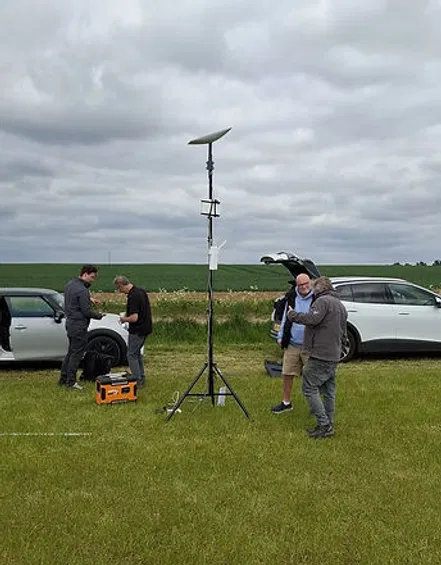
The equipment can be brought to site, installed and configured around your event layout. With the right planning, it can support payment points, staff systems and guest access across the areas that need coverage.
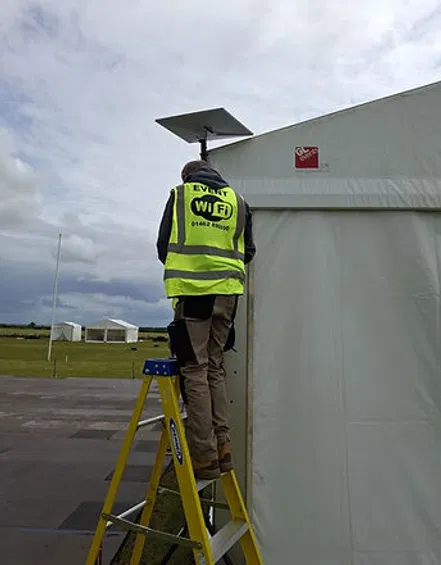
At Commsuk, our fully managed satellite WiFi service is designed for events of all sizes.
We handle the process from start to finish, including:
Pre-event planning
Site surveys
Equipment selection
Installation
Network setup
Payment and priority areas
On-site monitoring
Troubleshooting and support
Complete teardown after the event
Our systems are built for ultra-fast setup, even at locations with limited infrastructure. We include built-in backup for extra peace of mind, and our team stays involved on site so you are not left trying to solve an internet problem while managing your festival.
The goal is simple: reliable event connectivity without the stress.
A simple food festival WiFi checklist
Before booking your internet service, ask yourself:
1. Where are the busiest payment points?
Do not only count traders. Think about expected queues, peak service times and where the most popular stalls will be located.
2. What devices will traders use?
Ask whether they need card readers, tablets, order apps, printers or other connected equipment.
3. Which areas need priority access?
Ticketing, payments, staff communications and safety systems should be identified before guest WiFi is planned.
4. What happens if the main connection fails?
Ask about built-in backup, monitoring and on-site support. A backup plan is only useful if someone is ready to manage it.
5. Has the site been surveyed?
A proper survey can identify power requirements, equipment positions, coverage gaps and obstacles before installation day.
6. Who is responsible during the festival?
Make sure you know who to contact if a card machine stops working, a trader loses access or a busy area needs attention.
Make connectivity one less thing to worry about
Your food festival should be remembered for its food, atmosphere and guests’ experience.
Not for card payments that failed, queues that stopped moving or a programme page that would not load.
Reliable event WiFi supports the practical side of the festival while also helping guests enjoy and share it. It gives traders a better chance to serve customers quickly, and it gives your team the confidence to keep the event moving.
If your next food festival is taking place in a park, field or fairground, plan your connectivity early.
Learn more about satellite internet for remote events, or contact Commsuk to discuss a fully managed WiFi solution for your event.
Comments