How to Choose the Best Internet for Remote Events: Starlink vs. 5G
- Mobile tech
- Jun 24
- 5 min read
Organising a remote event is a bit like building a temporary city in the middle of a field. You’ve got the power sorted, the site map is perfect, and the vendors are booked. But then comes the big question: how do we get everyone online?
Whether it’s a rural agricultural show like Cereals 2026 at Diddly Squat Farm or a sprawling music festival, the "middle of nowhere" rarely comes with a fibre connection. In 2026, relying on "hope and a prayer" for connectivity isn’t an option: not when your ticketing, card machines, and live streams depend on it.
The debate usually boils down to two heavy hitters: 5G and Starlink (Satellite). Both have their fans, but choosing the wrong one can lead to the dreaded "spinning wheel of death" right when your gates open.
At Commsuk Limited, we spend our lives bringing fibre-fast WiFi to the middle of nowhere. Here’s the breakdown of how these technologies actually perform in the field.
The 5G Reality: Great Until the Crowd Arrives
We all love 5G on our phones. It’s fast, it’s snappy, and in most cities, it’s a dream. For a small pop-up event near a major town, a 5G router might seem like the perfect "plug and play" solution.
The Pros of 5G
Low Latency: When you have a clear, uncongested signal, 5G latency is incredibly low, which is great for interactive apps.
Quick Deployment: It’s basically a box with a SIM card. Power it up, and you’re often good to go.
Cost-Effective: For very small-scale needs where coverage is guaranteed, it's usually the cheapest entry point.
The "Event Day" Problem
Here is where 5G often falls down for organisers: Congestion.
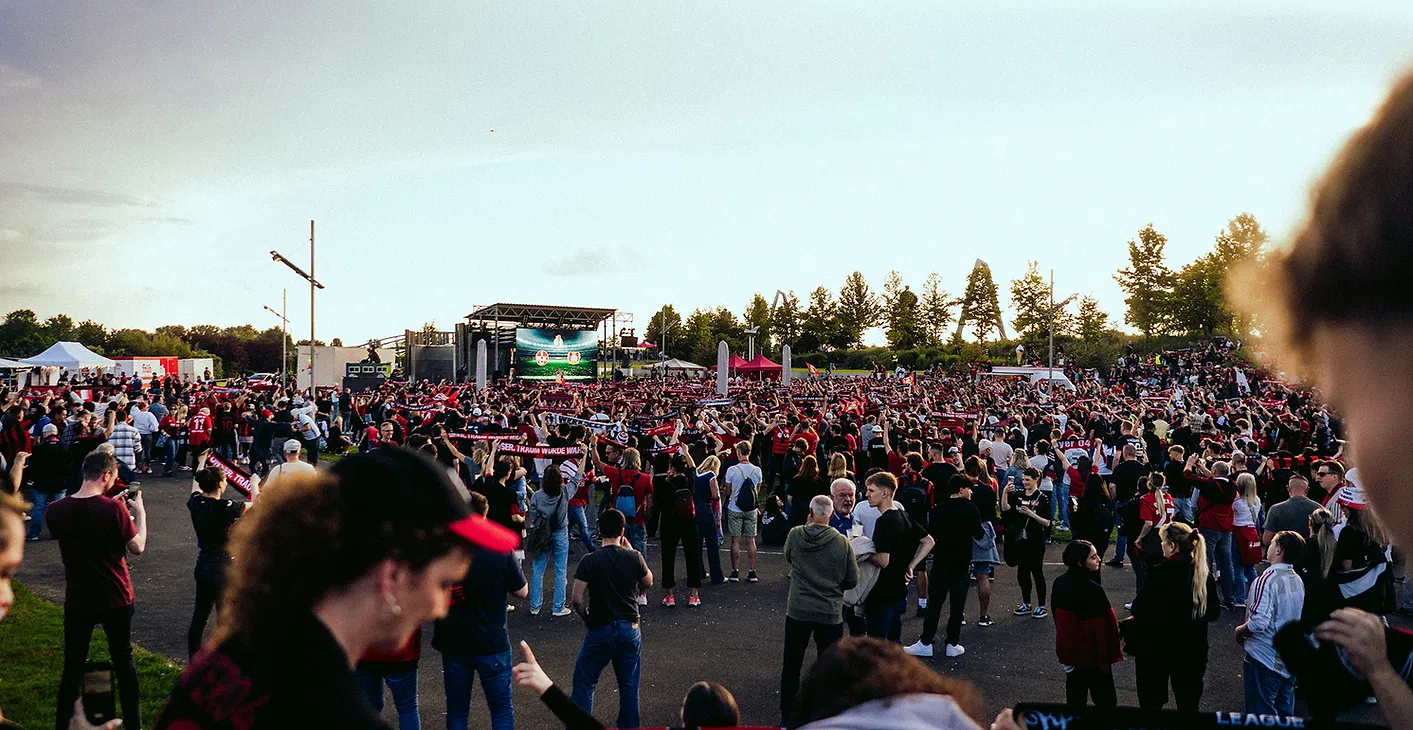
Mobile towers have a finite amount of "bandwidth breath." When your site is empty during setup, 5G might give you blistering speeds. But as soon as 5,000 attendees walk through the gates and start uploading Instagram Stories or checking their maps, that local tower gets choked. Even if your production router shows "full bars," the data simply can't get through the traffic jam.
Furthermore, remote venues often sit on the edge of a tower’s reach. A bit of heavy rain or a change in the leaves on the trees can be enough to drop a "good" 5G signal down to a useless 3G crawl.
Starlink: The Remote Reliability King
If you’ve been following event tech lately, you’ve heard of Starlink. It’s changed the game for remote connectivity by bypassing the local mobile towers entirely and talking directly to a constellation of satellites in Low Earth Orbit (LEO).
Why Starlink Wins for Remote Events
Total Independence: Starlink doesn't care how many people are using their phones at your festival. It isn't fighting for space on the local O2 or EE tower. It has its own dedicated path to the internet.
Coverage Anywhere: As long as you have a clear view of the sky, you have high-speed internet. From the Scottish Highlands to a deep valley in Wales, Starlink provides a baseline of reliability that 5G simply can't match in rural areas.
Production-Grade Bandwidth: It provides enough "oomph" for multiple HD live streams, staff comms, and back-office operations simultaneously.
The Starlink Catch
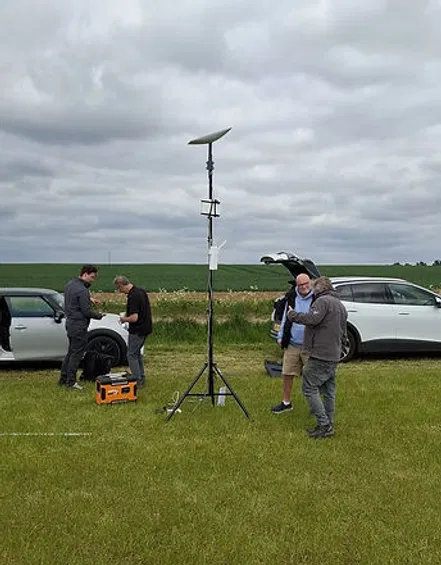
While Starlink is revolutionary, it’s not magic. It needs a clear line of sight. If you stick a dish under a massive oak tree or next to a high-rise stage, it will drop out. This is why professional installation is key. We often see organisers buy a Starlink kit and expect it to work like a home router, only to realise that satellites alone won't run your event WiFi. You need a managed network behind it to distribute that signal across your site.
Comparison at a Glance
Feature | 5G / Mobile Hotspot | Starlink (Satellite) |
Best For | Small events near urban areas | Remote, rural, or large-scale events |
Reliability | Vulnerable to crowd congestion | Highly stable and independent |
Setup Speed | Instant (if signal exists) | Rapid (requires sky view) |
Latency | Excellent (when uncongested) | Good (suitable for most event needs) |
Distance | Dependent on tower proximity | Works anywhere with a sky view |
Why "Both" is Usually the Right Answer
In the world of high-stakes events, we don't like to leave things to chance. That’s why Commsuk rarely relies on just one technology. The gold standard for any event that "cannot go offline" is redundancy.
We often deploy Starlink as the primary "heavy lifter" for production and staff, while using 5G as a secondary backup. Our advanced routers can "bond" these connections together. If a satellite is temporarily blocked or a 5G tower recovers some capacity, the system automatically shifts the data to the fastest, most stable path.
This ensures that your ticketing and guest access never miss a beat, even if one system takes a hit.
The Commsuk Managed Advantage
Choosing between Starlink and 5G is only half the battle. The real challenge is making sure that internet signal actually reaches the people and devices that need it.
When you work with Commsuk, you aren't just renting a dish or a SIM card. You’re hiring a team that handles the entire ecosystem:
Site Surveys: We check the terrain, the foliage, and the local tower capacity before we even arrive.
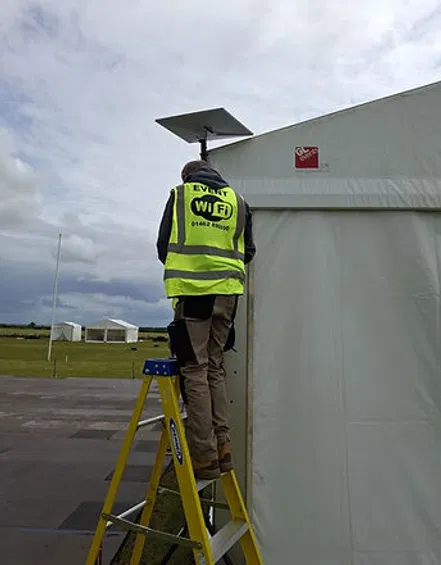
Hardware & Installation: We use professional-grade Starlink dishes and high-gain 5G antennas, mounted securely on masts or marquees.
Active Monitoring: Our engineers monitor your network in real-time. If we see a dip in performance, we fix it before your guests even notice.
Network Distribution: We take that satellite signal and blast it across your site using point-to-point links and ruggedized access points, ensuring full coverage even in challenging layouts.
Our goal is simple: we want you to forget about the internet. You should be focusing on your performers, your exhibitors, and your guests: not worrying about whether the card machines will work.
Checklist: Which one do you need?
Still unsure? Ask yourself these three questions:
Is the venue truly remote? If you’re more than a mile from a major road or town, 5G is a gamble. Go with Starlink.
How many people are attending? If it’s over 500, local 5G towers will likely struggle. Starlink (or a managed blend) is essential.
What happens if the internet goes down? If the answer is "the event stops," you need a redundancy plan that uses both.
Conclusion
Remote event internet doesn't have to be a headache. 5G is a fantastic tool for the right circumstances, but for the vast majority of remote, high-stakes events, Starlink provides a level of freedom and reliability that was unthinkable just a few years ago.
At Commsuk, we specialise in taking the guesswork out of the equation. We’ve powered everything from farm shows to city-centre festivals, and we know exactly how to tailor a setup to your specific location.
Ready to get your next event connected?Contact James and the team today for a no-nonsense chat about your requirements. Let’s make sure your "middle of nowhere" event stays firmly on the map.
Comments