The ROI of Reliable WiFi: How Better Connectivity Drives Your Event’s Bottom Line
- Mobile tech
- Jul 10
- 4 min read
When you’re looking at an event budget, "WiFi" usually sits under the 'Utilities' or 'Overheads' column. It’s often viewed as a necessary evil: a cost to be minimised rather than an investment to be leveraged.
But for the modern event director or financial controller, that’s a dangerous way to look at it.
In reality, reliable connectivity is one of the most powerful revenue drivers at your disposal. From increasing the number of drinks sold per hour to ensuring your high-value exhibitors sign up for next year, the quality of your internet has a direct, measurable impact on your bottom line.
At Commsuk Limited, we’ve seen events transform their financial outcomes simply by moving from "good enough" WiFi to "rock-solid" connectivity. Here is exactly how professional WiFi pays for itself: often by the end of the very first day.
1. The "Bar Queue" Metric: Speed is Money
At a major festival or agricultural show, the bar and food stalls are your engines of profit. But these engines only run as fast as your payment processing.
If your WiFi is patchy, card readers take five, ten, or fifteen seconds to process a transaction. In a busy queue of 200 people, those extra seconds are catastrophic. They lead to "queue fatigue," where potential customers see the line and walk away. Even worse, if the system drops out entirely, you’re forced to either stop trading or rely on "offline mode," which carries a high risk of declined payments later.
The ROI Calculation: Imagine a bar processing 1,000 transactions per hour. If reliable managed WiFi shaves just 4 seconds off each transaction, you’ve effectively gained over an hour of extra selling time across the day. That’s hundreds, if not thousands, of pounds in additional revenue that would have literally disappeared into thin air.

2. Exhibitor Retention: Protecting Your High-Value Assets
Your exhibitors and vendors are the lifeblood of your event's revenue. They pay for floor space and sponsorship because they expect to generate leads and sales.
If an exhibitor can’t demo their software, capture a lead on their CRM, or process a deposit because the "hall WiFi" is saturated, they aren’t just frustrated: they’re losing money. A vendor who loses a £10,000 lead because their tablet wouldn't sync is a vendor who won't be booking a stand next year.
Providing a dedicated exhibitor network ensures their tech works flawlessly. When their lead-gen works and their demos are smooth, their ROI goes up. When their ROI goes up, your retention rate skyrockets. It is significantly cheaper to keep an existing exhibitor than it is to hunt for a new one.
3. Free Marketing: The Power of Organic Reach
We live in the era of "pics or it didn't happen."
When an attendee sees something incredible at your event, their first instinct is to share it on Instagram, TikTok, or X. This is free, authentic marketing that reaches thousands of people you haven’t paid to target.
However, if your event has a "dead zone" or the network is too congested to upload a 10-second video, that post never happens. You’ve just lost a piece of organic reach. Multiply that by 5,000 or 10,000 attendees, and you are missing out on millions of potential impressions.
By investing in high-capacity event WiFi, you aren't just providing a service; you're fueling your marketing machine. You’re making it easy for your guests to tell the world how great your event is in real-time.

4. Operational Efficiency and Data
Reliable WiFi doesn’t just help the people attending; it helps the people running the show.
Real-Time Logistics: Staff can communicate via VoIP apps or internal systems without relying on patchy cellular signals.
Crowd Management: WiFi analytics can show you exactly where people are congregating in real-time. If a specific area is getting dangerously crowded, or if a particular stall is being ignored, you can react instantly.
Lower Staff Stress: There is a significant (though hard to quantify) cost to staff burnout. Dealing with technical failures, angry vendors, and frustrated guests is exhausting. When the tech "just works," your team can focus on delivering a great event rather than firefighting.
5. Mitigating the "Cost of Failure"
Industry data suggests that up to 30% of unexpected event costs can be traced back to connectivity failures. This includes everything from refunding ticket holders because the entry scanners failed, to paying overtime for staff who had to stay late because data syncing was too slow.
When you hire a professional team like Commsuk, you aren't just buying bandwidth; you're buying an insurance policy. We handle the site surveys, the satellite installations, and the constant monitoring. If there’s a potential issue, we see it and fix it before it ever reaches your desk.
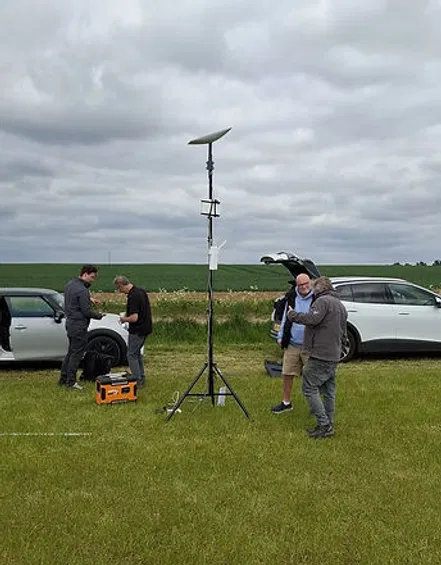
Why Professional WiFi Pays for Itself
Think of connectivity as the digital floor of your event. If the floor is full of holes, people trip, things break, and the whole experience suffers.
Investing in professional WiFi: the kind that uses high-performance satellite uplinks and enterprise-grade hardware: ensures that every other investment you’ve made (in marketing, in talent, in catering) can actually perform.
The Bottom Line: Better connectivity leads to:
More Sales: Faster transactions and more "selling minutes."
More Leads: Exhibitors who can actually do their jobs.
More Reach: Attendees who act as your PR department.
Less Risk: Zero downtime and no "offline" payment disasters.
If you’re planning an event and want to ensure your connectivity is driving profit rather than draining it, get in touch with the team at Commsuk. We specialise in making the "impossible" locations possible, ensuring your event stays online, no matter what.
Comments